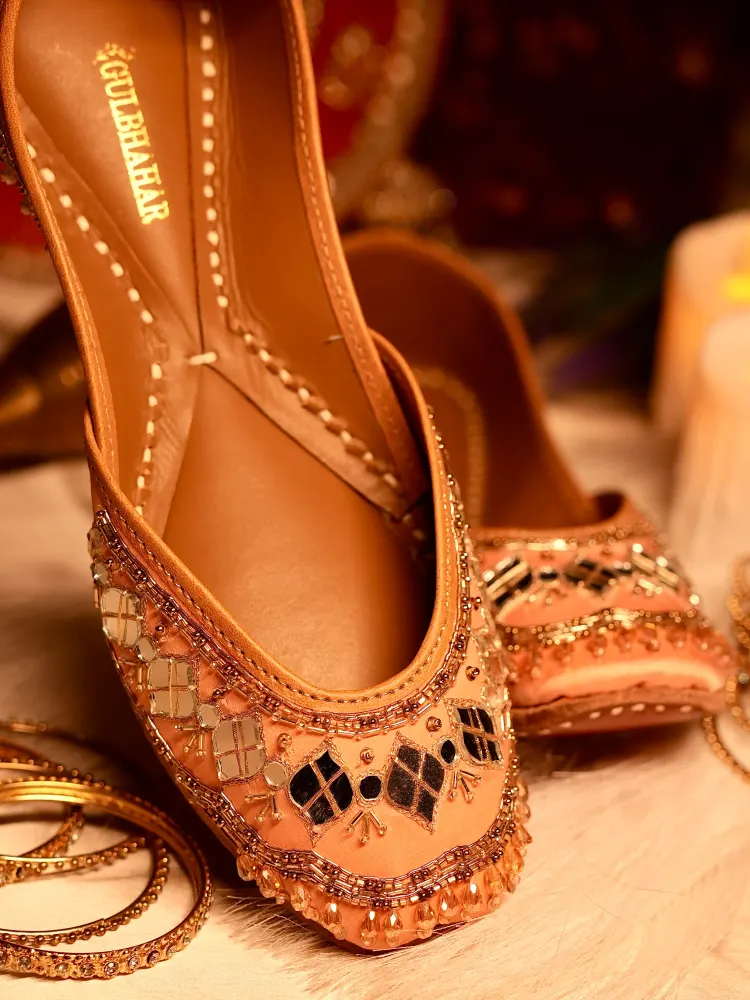
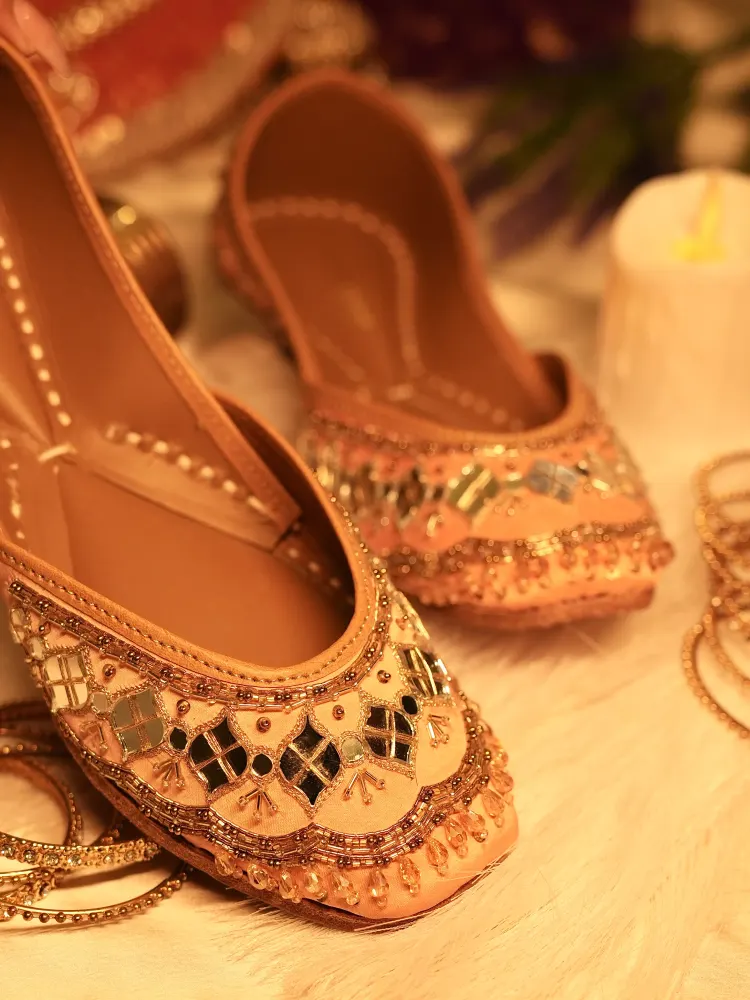
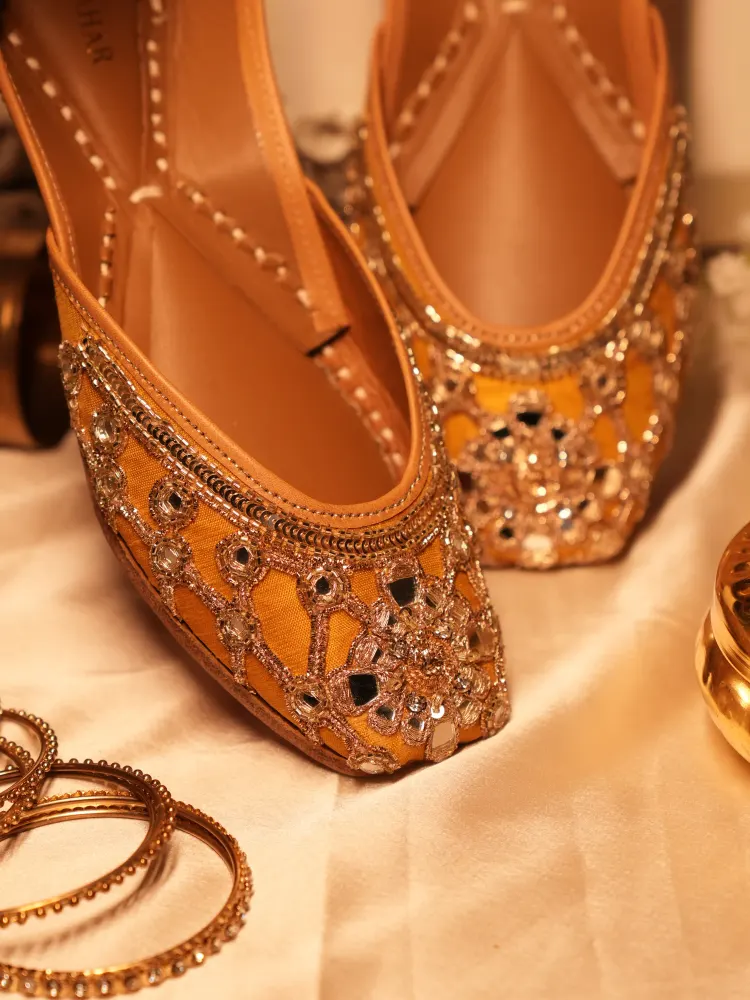
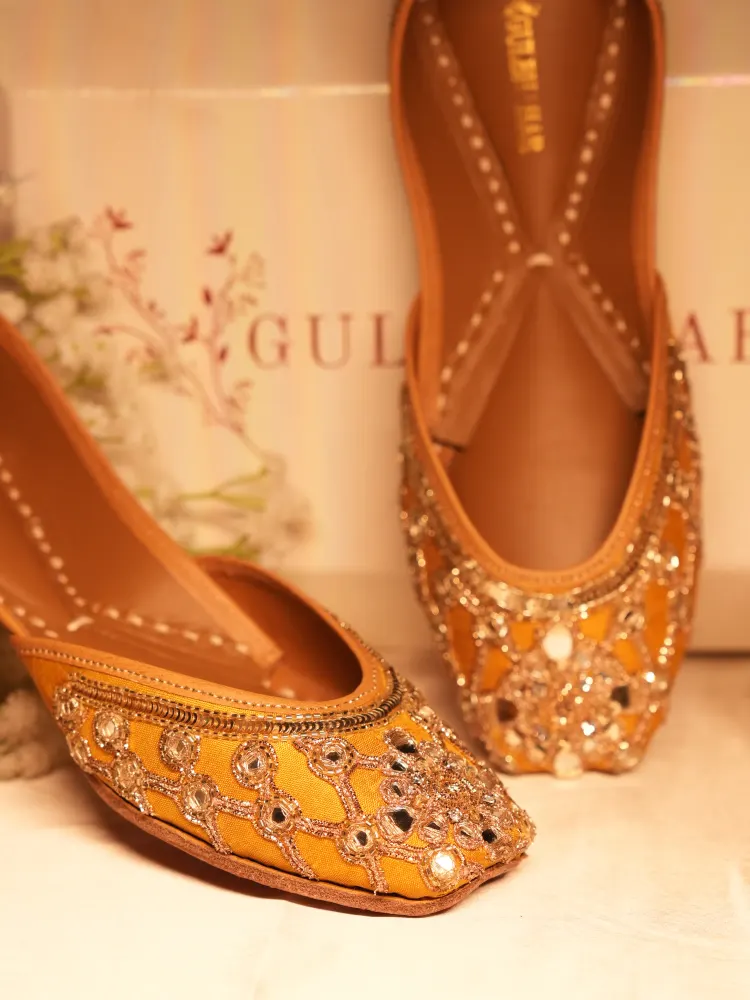


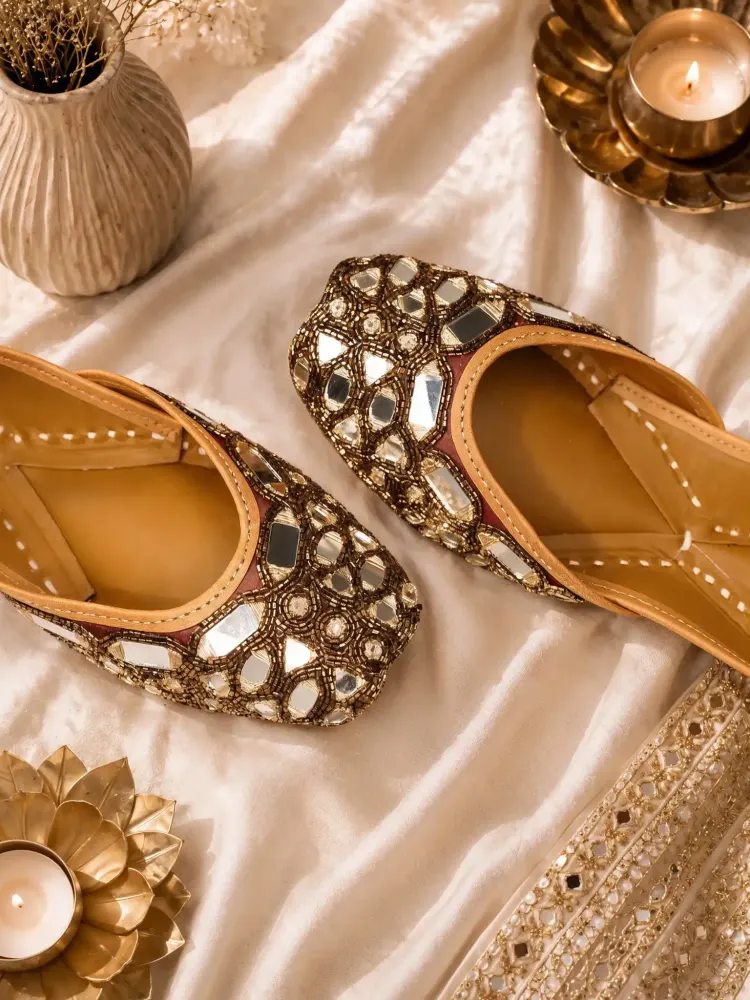
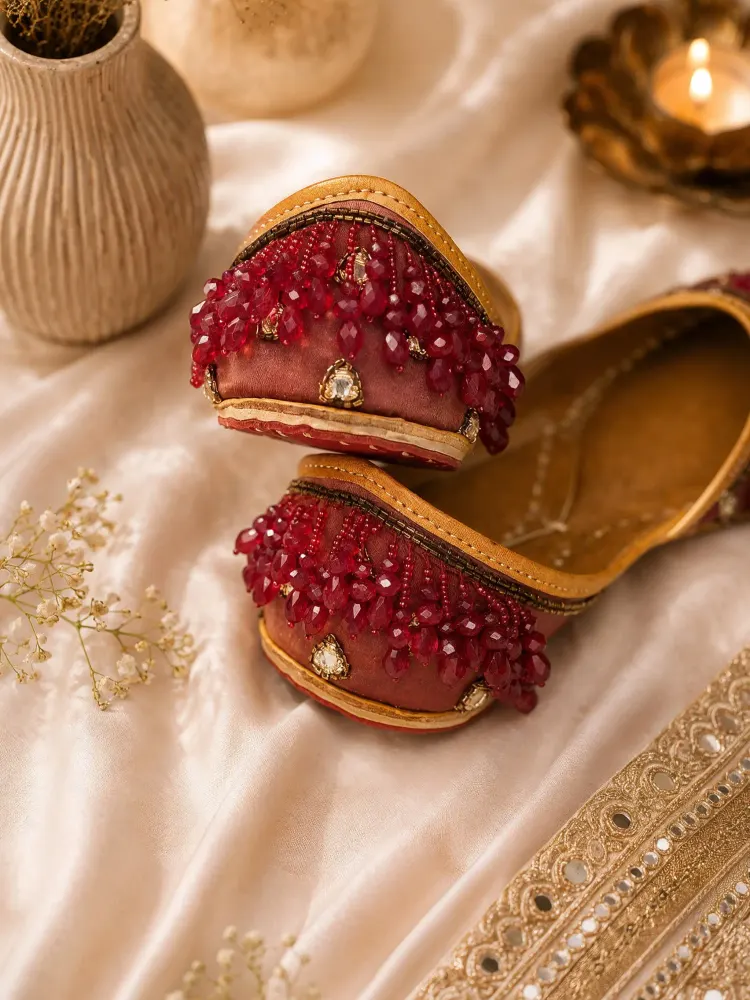
Mojari - Buy Mojari by Gulbhahar
Read more ▼See less ▲
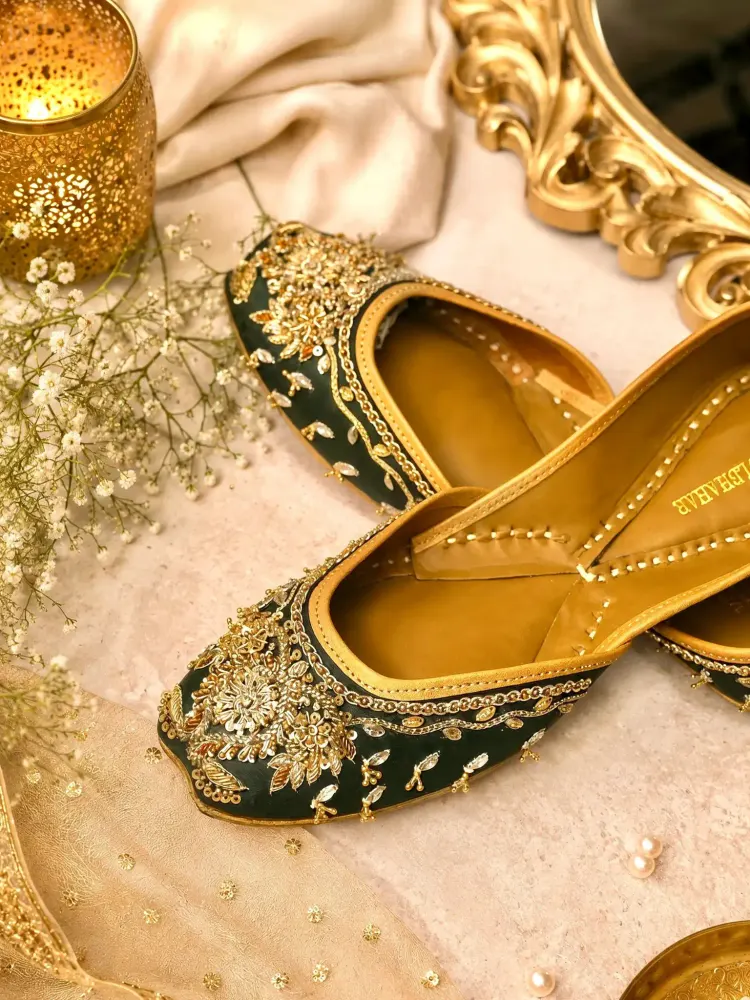
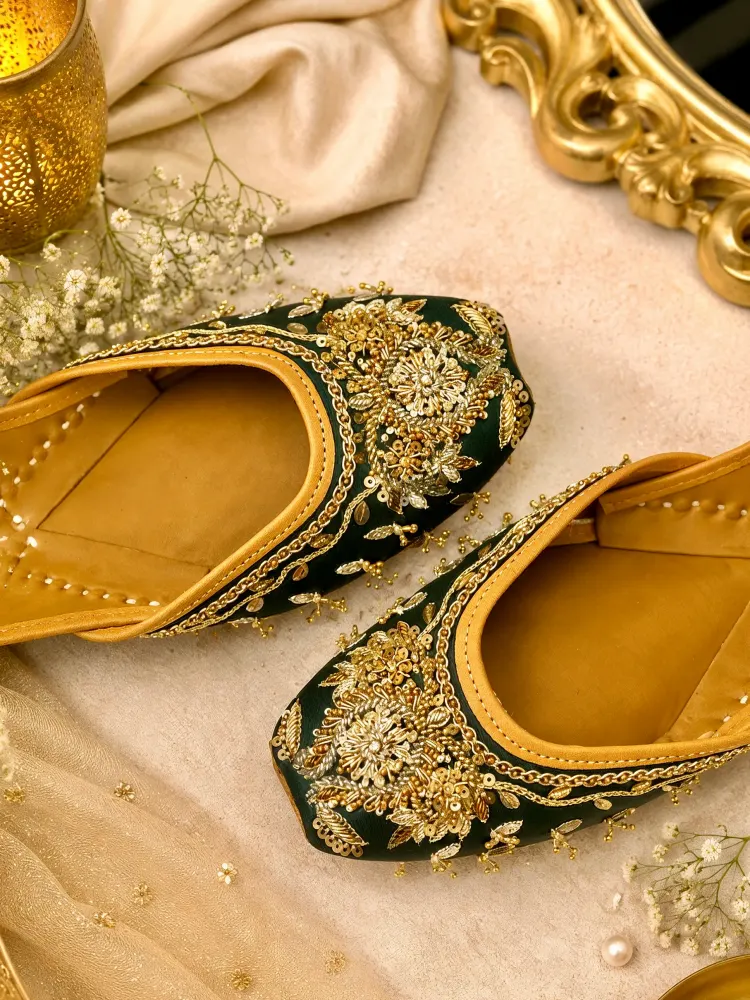
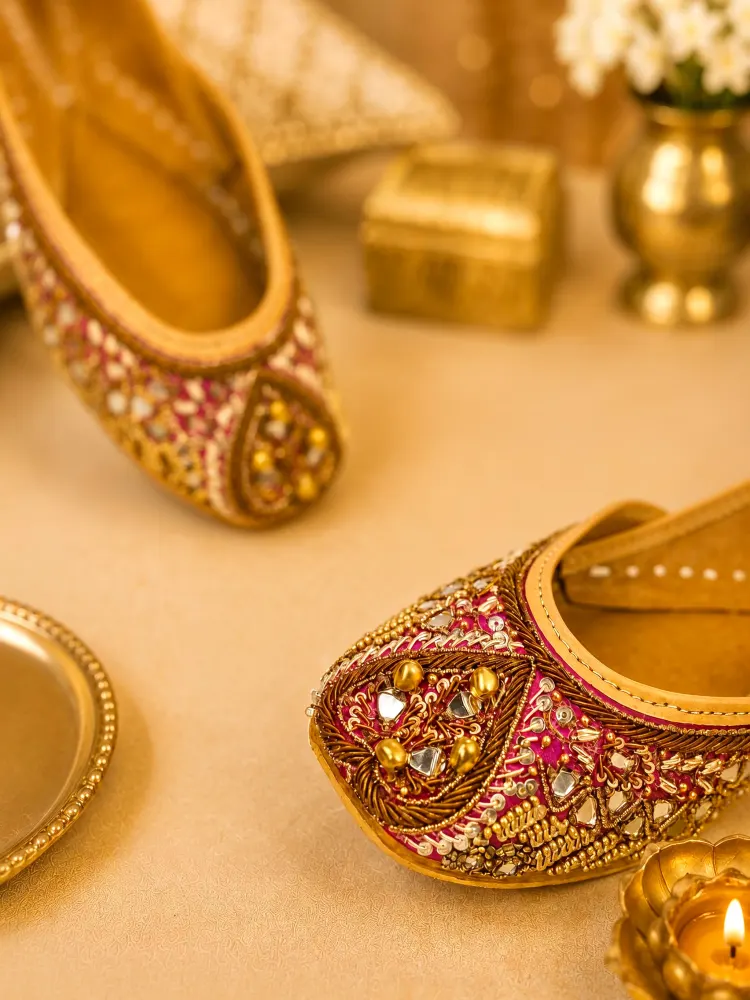
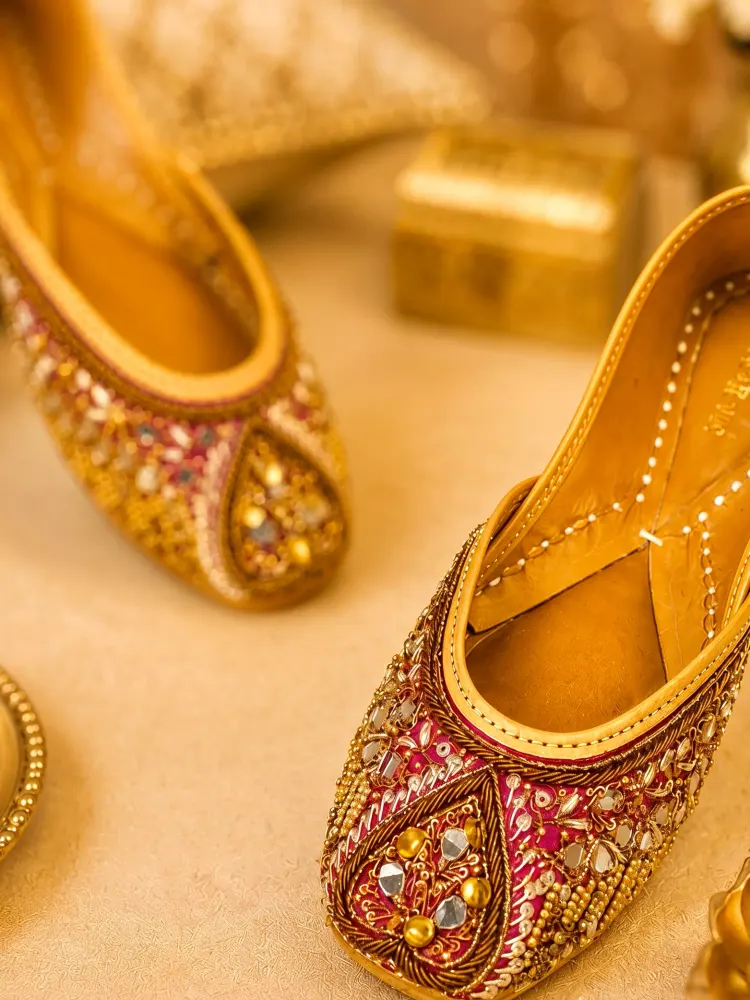
At Gulbhahar, we believe in the power of tradition to lift modern living. Our mojaris are a true reflection of this philosophy, displaying ageless elegance and cultural past. Crafted with meticulous care by skilled makers who have honed their skills over generations, these mojaris epitomize the rich weave of Indian art. Each pair is a made with love, bearing the hallmark of customary techniques passed down through generations. These mojaris are not just footwear; they are an expression of dignity and grace. Ideal for family gatherings, weddings, or cultural celebrations, they effortlessly blend into the fabric of our traditions. The understated elegance of our mojaris makes them a perfect choice for any occasion that calls for modesty and refinement. By choosing Gulbhahar's mojaris, you are not only making a style statement but also celebrating the cultural importance they hold. They carry forward the generational traditions of Indian women, who have always cherished grace and elegance above all else.
Popular Styles in Mojari
Bridal Red Mojari for a Royal Touch
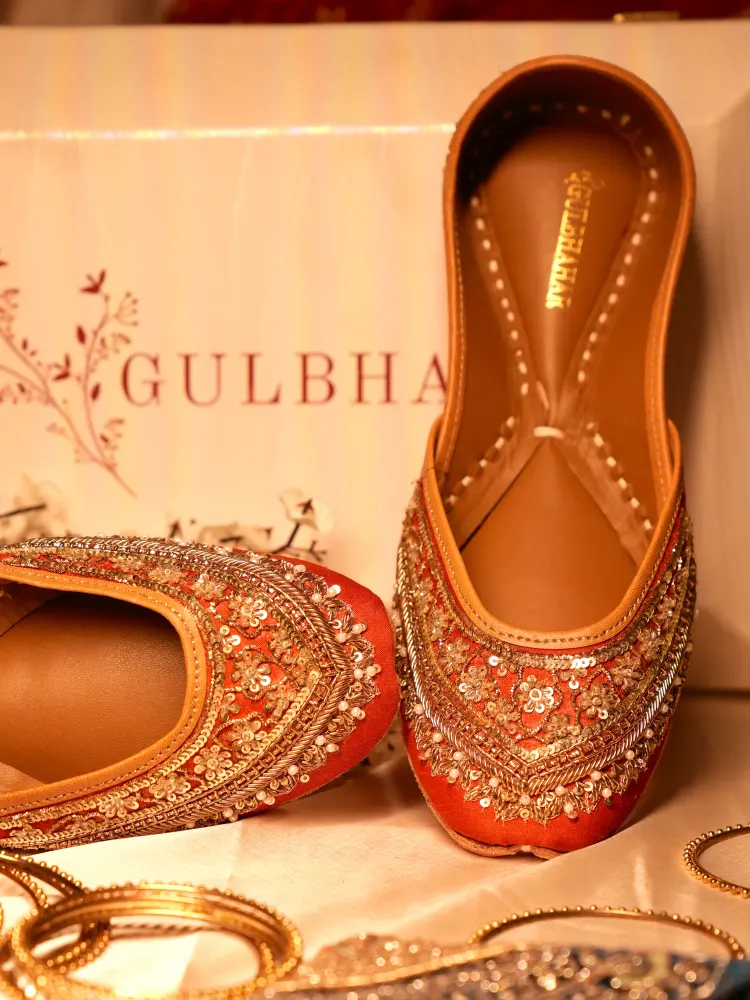
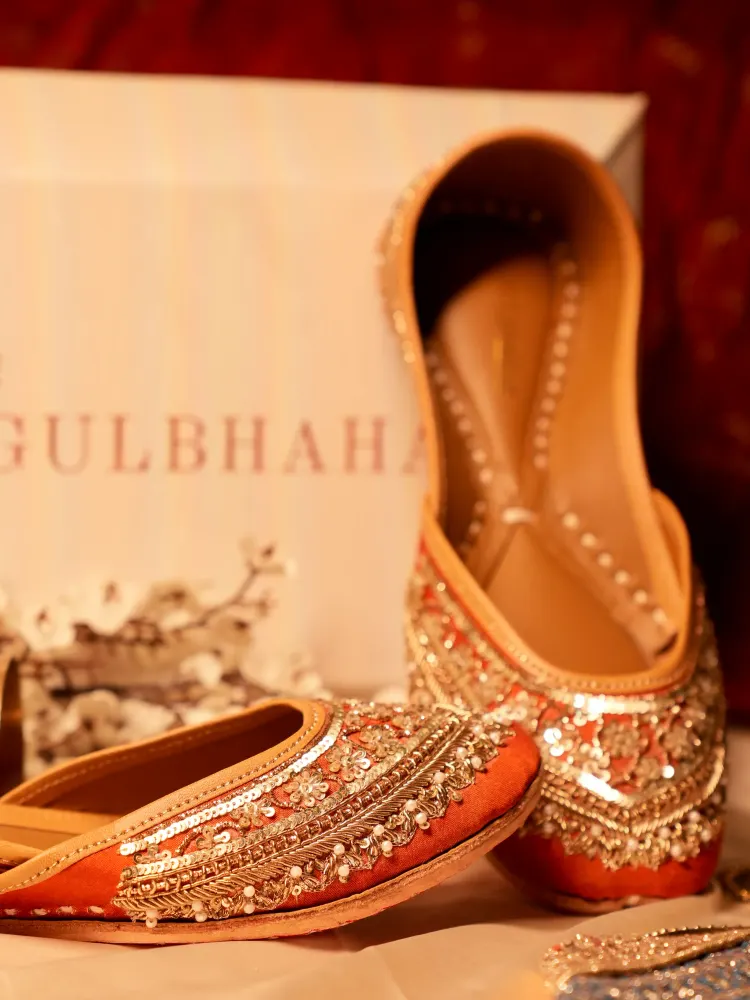
For your special day, opt for our bridal red mojaris to complement traditional wedding attire. They look stunning with a Ladies Mojari Online ensemble in gold or off-white, adding a touch of regality and elegance. Pair them with heavy embroidery and intricate beadwork on your lehenga for a visually captivating outfit.
Floral Embroidered Mojari for Diwali Celebrations
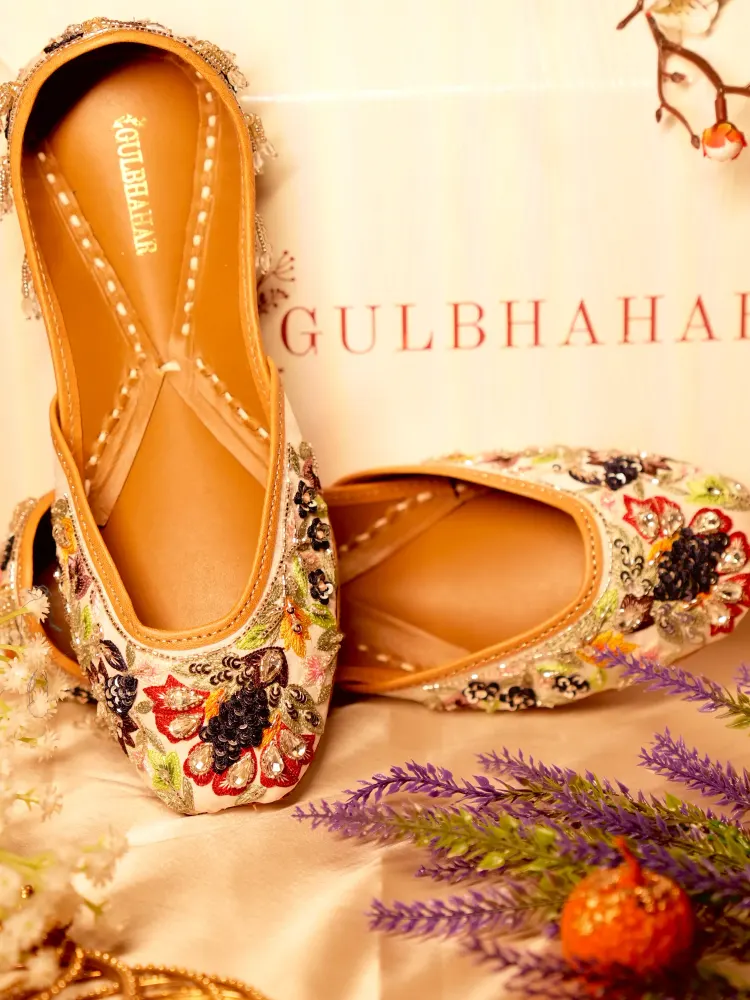
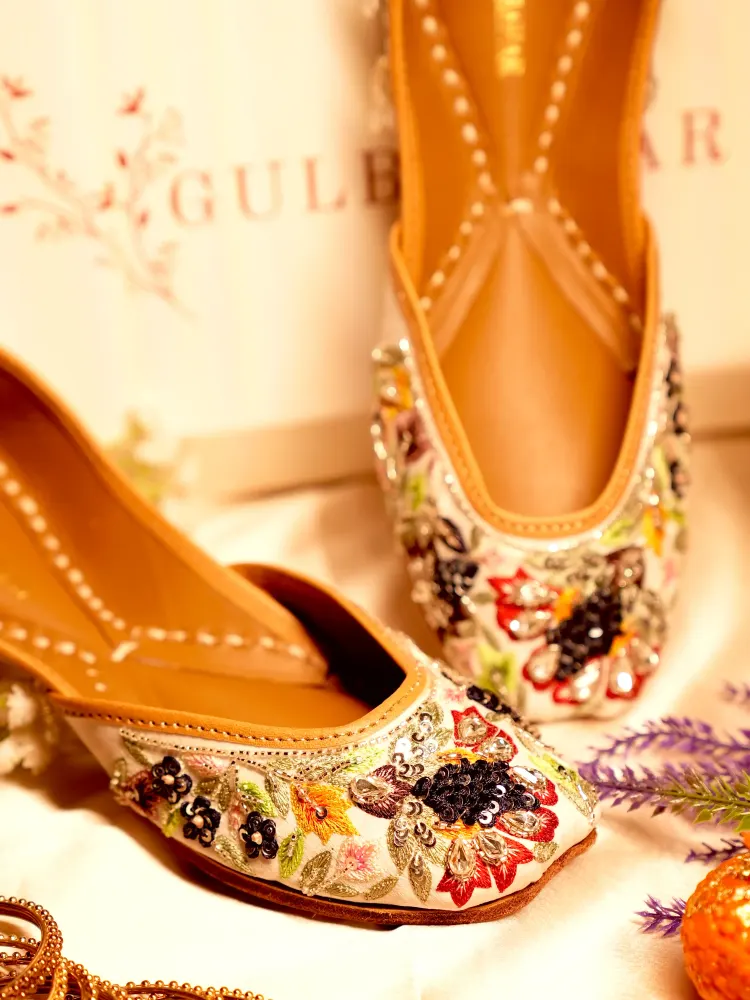
Add some festive cheer to your wardrobe with our floral embroidered mojaris perfect for Diwali celebrations. These shoes are ideal when styled alongside an elegant Shirt With Lehenga Skirt in bright hues like maroon or deep blue. Complete the look with a gold necklace and silver bangles for a traditional yet modern Diwali attire.
Ivory White Mojari for an Office Look
For everyday office wear, ivory white mojaris pair beautifully with a Three Part Suit in pastel tones like mint green or baby pink. These shoes provide the perfect blend of comfort and sophistication while staying true to traditional Indian fashion. Pair them with simple yet elegant earrings for a professional yet chic look.
Gold Accented Mojari for Festive Outfits
Elevate your festive wear with our gold accented mojaris, which are ideal for events like Eid or cultural festivals. They go well with an intricate Lehenga New Dijain in vibrant shades such as ruby red or turquoise blue. To complete the outfit, add a delicate gold hand embroidery belt and matching jhumka earrings for a cohesive look.
Silver Embroidery Mojari for Cocktail Parties
Silver embroidery mojaris are perfect for cocktail parties where you want to make a statement without being too formal. Combine them with a sleek Jutti Shoes in neutral colours like beige or grey for a modern twist on traditional footwear. Finish off the ensemble with a pair of silver hoop earrings and a simple clutch.
Beaded Mojari for Casual Celebrations
Casual celebrations call for beaded mojaris that add just the right amount of sparkle without overpowering your outfit. They work well when paired with a chic Jutti Brands in soft pastels like blush or lavender. Keep it simple with minimalistic jewellery, allowing the beaded detailing on your mojaris to take centre stage and elevate your overall look.
Enduring Handwork: Generations of Skill
The mojari is a sign to the enduring handwork of Indian technique, passed down through generations. Each pair is carefully made by hand by skilled skilled workers who have honed their techniques over lifetimes dedicated to this sacred tradition. The fancy embroidery and soft beadwork are not just aesthetic adornments but symbols of the artisan's dedication, patience, and skill.
Art as Cultural Past
The mojari is more than a footwear; it is a living embodiment of India's rich cultural roots. Its crafting involves customary techniques like zardozi (gold thread embroidery), kamdani (stone-studding), and ghaspitha (velvet appliqué work). Each technique tells a story of our past, preserving history through every pair of mojaris created.
Celebrations and Ceremonies: The Mojari's Role
Mojaris are an integral part of Indian celebrations, from grand weddings to intimate family gatherings. They adorn women during festivals like Diwali, Eid, and Navaratri, adding a touch of festive joy to their set. On auspicious occasions such as karva chauth, rakhi, or haldi ceremonies, mojaris symbolize the purity and grace befitting these sacred events.
Design History: Motifs that Tell Stories
The mojari's design is a rich fabric of old motifs, each with its own story to tell. 'Mango' or 'amra' designs signify prosperity, while 'chandrakor' motifs represent the full moon, symbolizing happiness and good fortune. The 'phool' (flower) pattern shows beauty and grace, reflecting the wearer's inner elegance.
Amra | Chandrakor | Phul
Grace and Modesty: The Mojari Woman
The mojari is a symbol of feminine grace and modesty. Its design, often featuring detailed embroidery around the ankle, highlights the wearer's elegance without being overtly revealing. It encourages a confident yet modest bearing, reflecting the ancestral Indian woman's poise and dignity.
Cultural Values: Modesty and Tradition
Mojaris embody culture values that celebrate modesty ('sauchar') and tradition ('parampara'). They are a reminder of our cultural history, keeping us connected to our roots even as we navigate modern life. Key aspects of Indian culture like 'satya' (truth), 'ahimsa' (non-violence), and 'seva' (service) find reflection in the mojari's classic design.
- Sauchar:
- Modesty
- Parampara:
- Tradition
Generational Appeal: Ageless Tradition
Mojaris are not just for today; they are a ageless tradition that spans generations. From grandmothers to mothers to daughters, each woman in the family owns a pair of mojaris, passing them down as treasured heirlooms. Wearing these shoes is akin to wearing history, connecting us to our ancestors and creating lasting memories.
Regional Tradition: Cultural Authenticity
The mojari's design varies regionally, reflecting India's rich cultural diversity. In Rajasthan, they are embellished with detailed mirror work ('shisha'), while in Gujarat, they characteristic rich 'bandhani' tie-dye patterns. Each regional style is a celebration of local technique and cultural tradition, making mojaris not just footwear but ambassadors of India's regional cultures.
Frequently Asked Questions
How can I style my mojari for a traditional Indian wedding ceremony?
For an Indian wedding, consider pairing your mojari with a richly embroidered lehenga or saree. Opt for subtle colors like gold, silver, or pastels that complement the occasion’s festive spirit. Complete the look with statement jewelry and a delicate bindi to exude timeless elegance.
When is it most appropriate to wear mojari during cultural events?
Mojari is perfect for auspicious occasions like weddings, pujas, Diwali, and family gatherings. Their intricate design and cultural significance make them ideal for rituals where tradition takes center stage. They are also well-suited for formal events where modesty and grace are valued.
Can you explain the traditional design elements in mojari?
Mojari showcases exquisite craftsmanship with intricate embroidery, mirror work, and gemstones. The artisan-crafted details reflect India’s rich cultural heritage. Each pair is unique, honoring the feminine grace and modesty cherished in traditional attire. They blend seamlessly with heirloom jewelry and draping styles for a complete ethnic ensemble.
Keywords
mojari | buy mojari online | mojari online shopping | shop mojari online india | original mojari online | best website to buy mojari | mojari with blouse online | mojari free shipping india | affordable mojari online | premium mojari online | mojari price | mojari under 2000 | mojari under 3000 | mojari under 5000 | cheap mojari online | best price mojari | budget mojari | mojari sale | discount mojari online | latest mojari offers | bridal mojari | wedding mojari | red mojari for bride | designer bridal mojari | traditional mojari for marriage | mojari for reception | latest mojari designs | trending mojari | modern mojari | stylish mojari for women | new collection mojari | celebrity style mojari | lightweight mojari | party wear mojari | handloom mojari | real zari mojari | katan silk mojari | organza mojari | georgette mojari | authentic mojari online | buy mojari under 3000 online | best mojari for wedding under 5000 | lightweight mojari for summer | pure silk mojari online india | affordable bridal mojari | mojari for festivals online | daily wear mojari lightweight | mojari online india free delivery | mojari online india | mojari near me | mojari delhi online | mojari varanasi original | indian mojari online