Introduction
Minimalism was fun while it lasted. Sleek lines, muted colours, nothing excessive. But India collectively saw the last ten years of beige, and they said no thank you. Desi maximalism is the result. It is embroidery in abundance, jewel tones, layers of textures, motifs of swans made out of gold threads, and garments that scream, "Look at me." It is not about going overboard, but about putting together everything purposefully. And in 2026, it is the trend that appears everywhere from every Indian fashion Instagram account worth its salt. The Gulbhahar Collection fits right into this niche.
What Is Desi Maximalism Anyway?
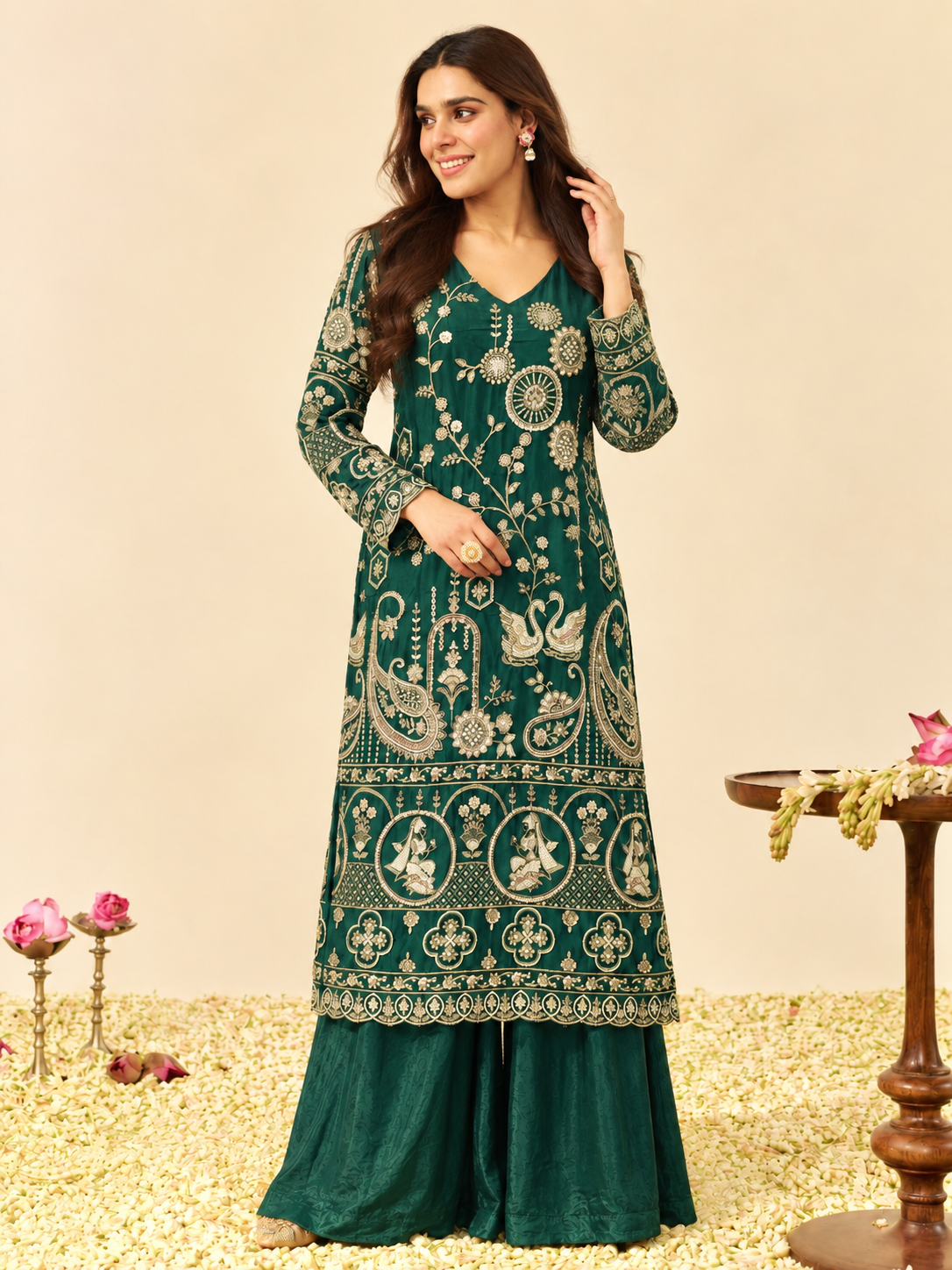
Desi maximalism does not equate to over-the-top just for the sake of it. Desi maximalism is about making everything luxurious in your outfit, from fabrics, through embroidery and colours, to silhouettes – and doing so without anything clashing with each other in the process. Imagine bottle green silk with gold swan embroidery. Imagine a magenta purple with an intricate Mughal design in gold thread. Imagine sharara suits with heavy embroidery taking weeks to craft a story. This is what desi maximalism looks like.
Why Desi Maximalism Has Become a Trend in India in 2026?
It was only a matter of time. Gen Z and millennial Indians have been reclaiming the craft traditions of the country in their own way. With social media creating a desire for looks that are visually heavy, there's an overall cultural pride in young Indian women that has decided they do not want to follow the more subdued route to sophistication. Desi fashion has always had maximalist elements – embroidery, diverse silhouettes and heavy fabrics have been a staple in Indian fashion for ages. Desi maximalism is nothing revolutionary.
The Outfit Made for Desi Maximalism
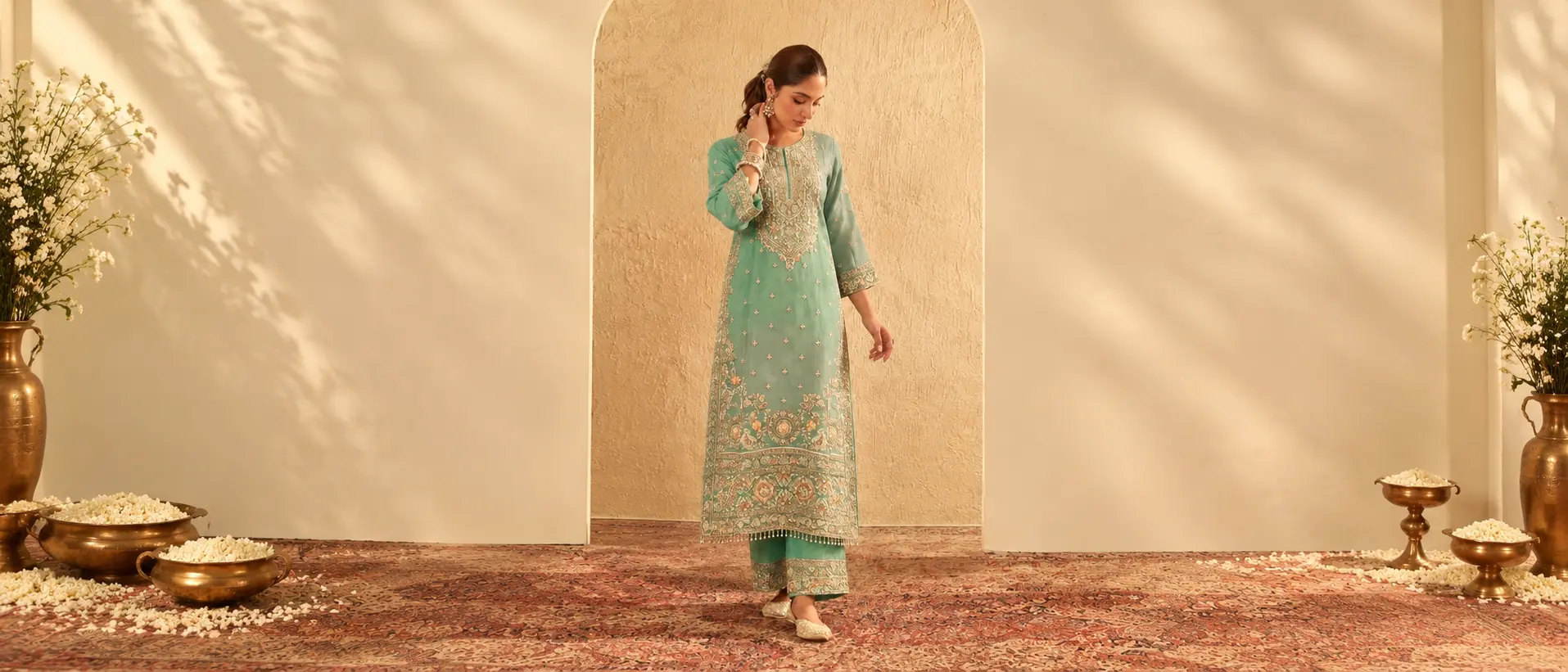
There are outfits designed just to make a statement. The Green Heavy Ethnic Co-Ord is one of them. It comprises the bottle green silk crepe kurta covered in all-over dense vine floral embroidery with designs of swans and ladies, worked completely by hand using sequins, beads and dabka. Circular medallions accentuate the design, which is so dense that it seems like a work of artistry. Everything about the outfit has a meaning and intention behind it. Nothing has been left untouched or plain. This is what Desi maximalism looks like.
Maximalism when it comes in the form of a Printed Sharara
Desi maximalism isn’t confined to just embroidery. An eye-catching print on fine fabric that has enough embellishments to back it up can convey the same vibe. The Mustard Printed Sharara Suit is here to make that point. The straight kurta in pure crepe has festive embroidery starting from the neckline and extending to the end of the full sleeves. On the other hand, the sharara has an immense wide flair in mustard yellow with gota cutwork, tassels, and sequins throughout. Festive lighting only adds more vibrancy to the mustard hue, while every aspect of the design contributes to it.
Heavy Embroidery for the Occasions That Call for It
There will be times when you need an outfit that is as grand as the occasion itself. A reception, a sangeet or a big family function. This is when maximalism becomes essential. The Rani Pink Heavy Sharara Suit has been designed keeping in mind such situations. This straight-cut silk kurta is heavily embroidered with a round neckline, sequin and bead embroidery running through the entire front panel and finished with embroidered cuffs that create full-length sleeves. The sharara adds drama below.
When Maximalism Picks Purple and Pulls It Off With Panache
Colour is an important part of desi maximalism. It is not just about subtle colours but also vibrant and rich colours. The richness of royal purple is incomparable to other jewel colours, and in the right material, the colour looks regal on its own. The Magenta Purple Kaftan Suit proves the point brilliantly. The silk blend kaftan kurta has a deep V-neck design with ornamental embroidery, Mughal-inspired paisley motifs and zari embroidery with intricate border embroidery details. The flared sharara gives it a voluminous look. The magenta purple adds warmth to the royal purple.
A Subtle Way to Wear Desi Maximalism
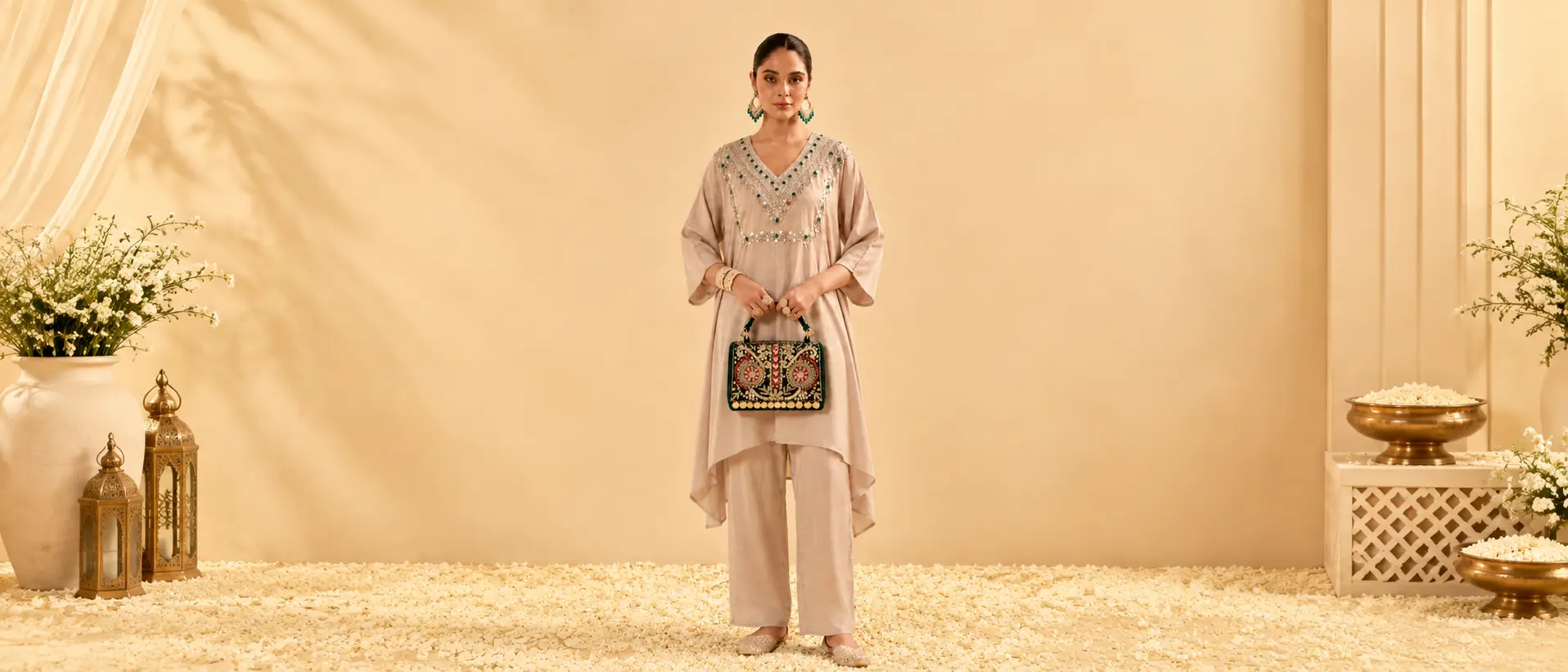
Not all maximalist designs are meant to be flamboyant; sometimes the beauty lies in subtleties and the details. The Silver Grey Designer Suit represents just that. Starting off with the silk straight-cut kurta, which has an elaborately detailed round neck with hand embroidery, along with full sleeves with embroidery detailing on the cuffs. Fine embroidery with thread, zari, sequins, beads, and crystal work creates a soft glitter in the entire ensemble. This straight pants ensemble comes with a perfectly tailored straight fit. Adding to it, the light organza dupatta with an embroidered border makes the entire suit set complete. The Silver Grey Designer Suit can be purchased in silver grey and blush peach colours.
Desi Maximalism Is Not a Trend. It Is a Return.
The idea that Indian fashion needed to become more minimal to become more sophisticated was always a borrowed idea. Indian craft traditions - the zari weaving, the hand embroidery, the mirror work, the dabka techniques - were never minimal. They were always rich, dense, considered, and deeply skilled. Desi maximalism in 2026 is simply Indian women recognising this and dressing accordingly. The Gulbhahar Collection is built around exactly this kind of craft-forward thinking across every silhouette and price point.
Tags
Frequently Asked Questions
Desi Maximalism Fashion Definition?
Desi Maximalism is a fashion style which is characterised by opulent embroideries, gem colours, textured fabrics, and dense looks and crafts in each part.
What is the reason for the popularity of the desi maximalism trend in India in 2026?
The reasons are the Gen Z movement to reclaim the Indian crafting tradition, social media preference for visually complex content, and greater cultural confidence of Indian women who are tired of the notion that restraint is more sophisticated than lavishness.
Which colours are the base for desi maximalism?
The key colours for this fashion style are jewel tones. Bottle green, royal purple, magenta, rani pink, deep mustard, and gold are the dominant ones.