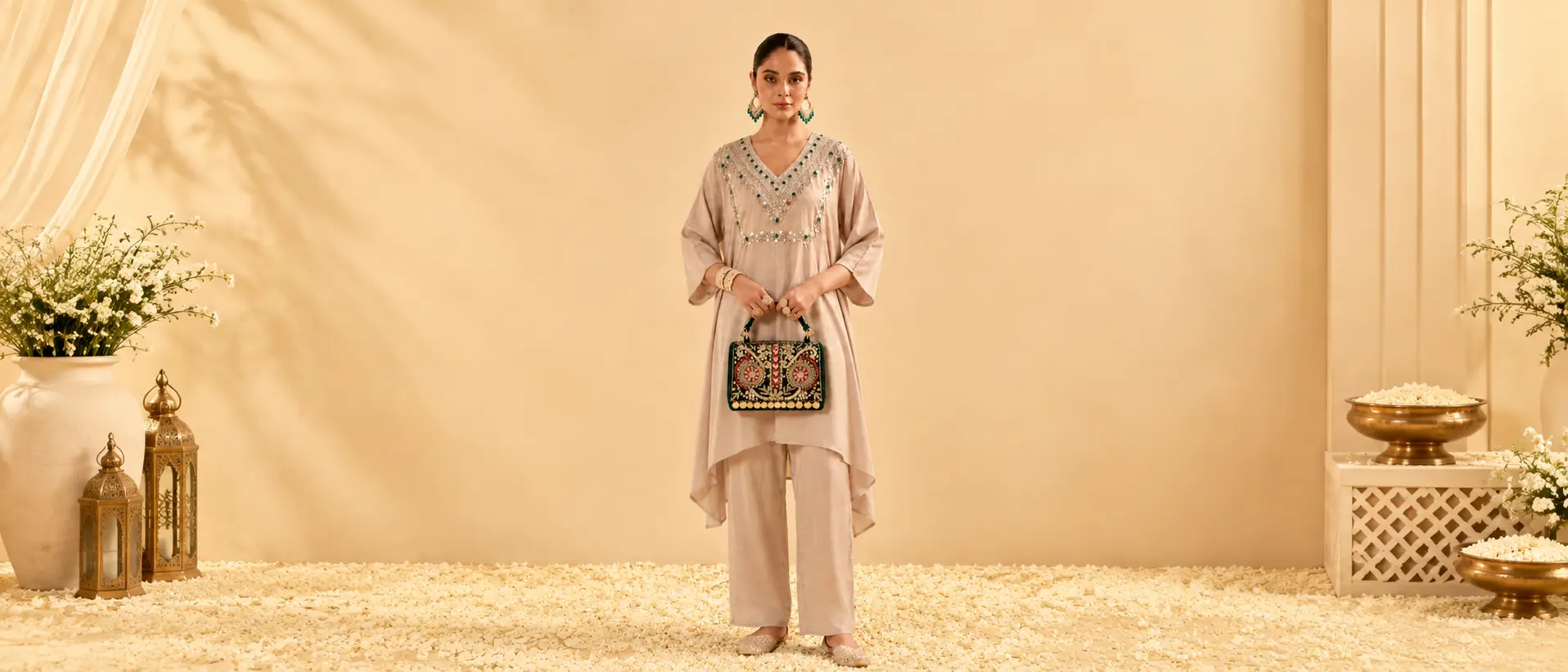
Introduction
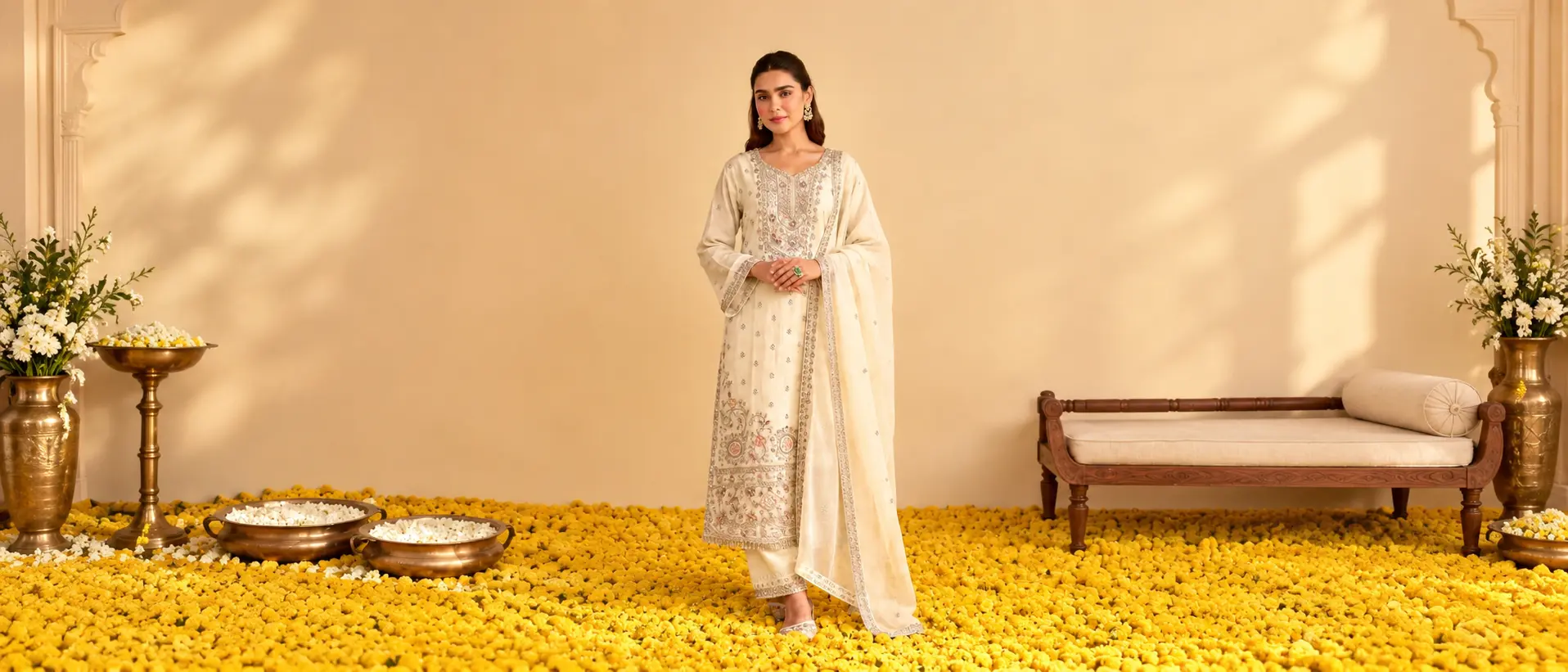
Almost all women have one of these outfits in their wardrobe. The dress that is never worn, still with its labels attached or neatly folded up after being put on just once. Not because there was nowhere to wear it. Rather because there was nowhere good enough to wear it. The dress was just too beautiful. The event was too ordinary. Somewhere else was bound to be better. And so, it waits. The Gulbhahar Collection is packed with outfits like this one, and this blog will tell you why it happens and how to deal with it.
Why Do We Buy Outfits and Do Not Wear Them?
There is some deeper psychology behind this. Buying a beautiful piece of clothing automatically puts us into a protective mode when it comes to this item. It becomes a dress for our ideal self at a future perfect event. Wearing it somewhere less fancy becomes a waste of the item. Hence, we keep waiting for the right moment. Which never arrives, as no real event is always as good as we imagine it.
The Ivory Suit That Has Been Waiting for Its Moment
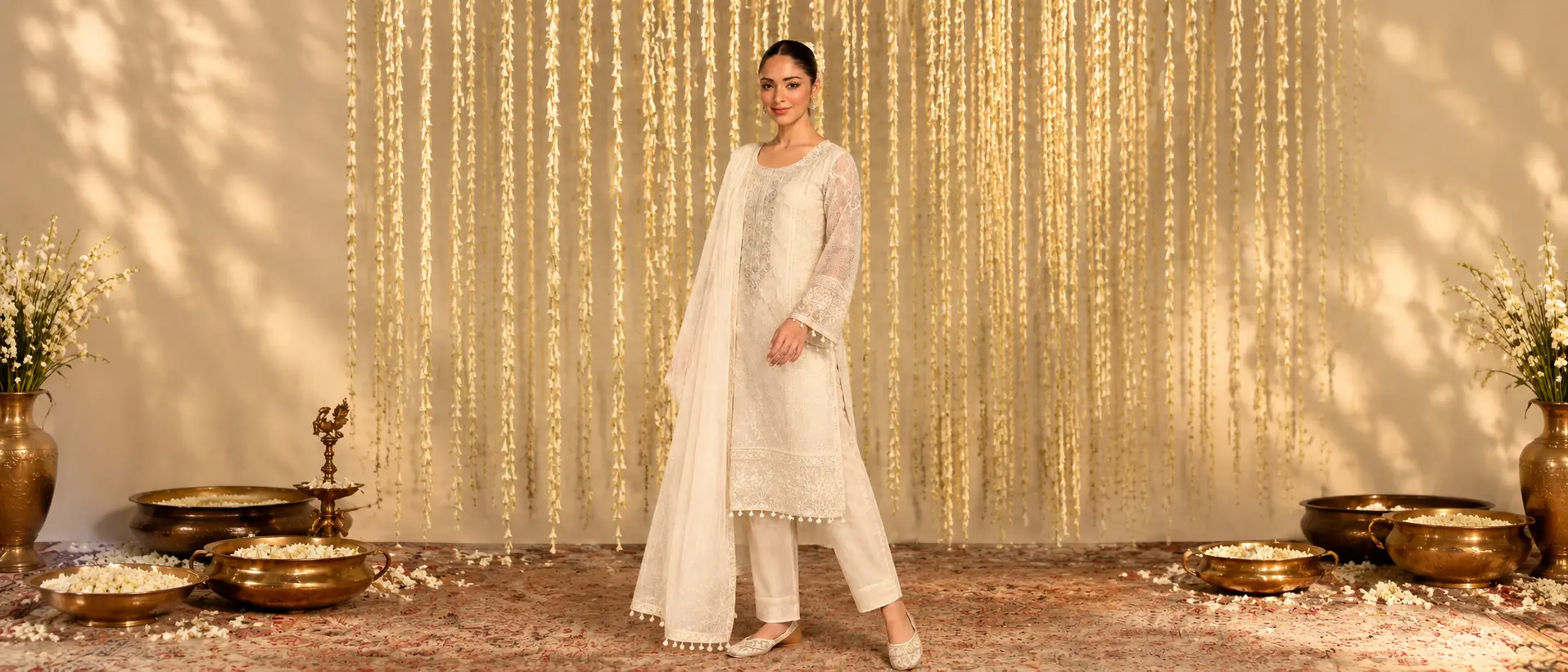
That's why the Ivory Bridal Kurta Set is the kind of ensemble that inspires such a reaction. Its tissue silk foundation is covered in delicate gold motifs. Gold and copper zardozi and sequin thread embroidery decorate the border. The florals are extremely detailed, almost hand-drawn. Beaded tassels line the hem. The complementary dupatta is just as delicately embroidered. It's the kind of outfit women purchase but don't wait to wear right away. They imagine an appropriate occasion, and that occasion becomes a wedding reception. Then a very good wedding reception. Then one for their dear friend's very good wedding reception. The suit waits.
What is Considered a Good Enough Occasion?
This is where things get psychologically fascinating. In most cases, a majority of women cannot pinpoint what occasion would qualify as the appropriate moment to wear the coveted outfit. Asked outright, they would simply say something like "very special event" or "perfect wedding." The truth, however, is that the bar will keep getting raised because once the outfit is worn, its untouchable quality is compromised.
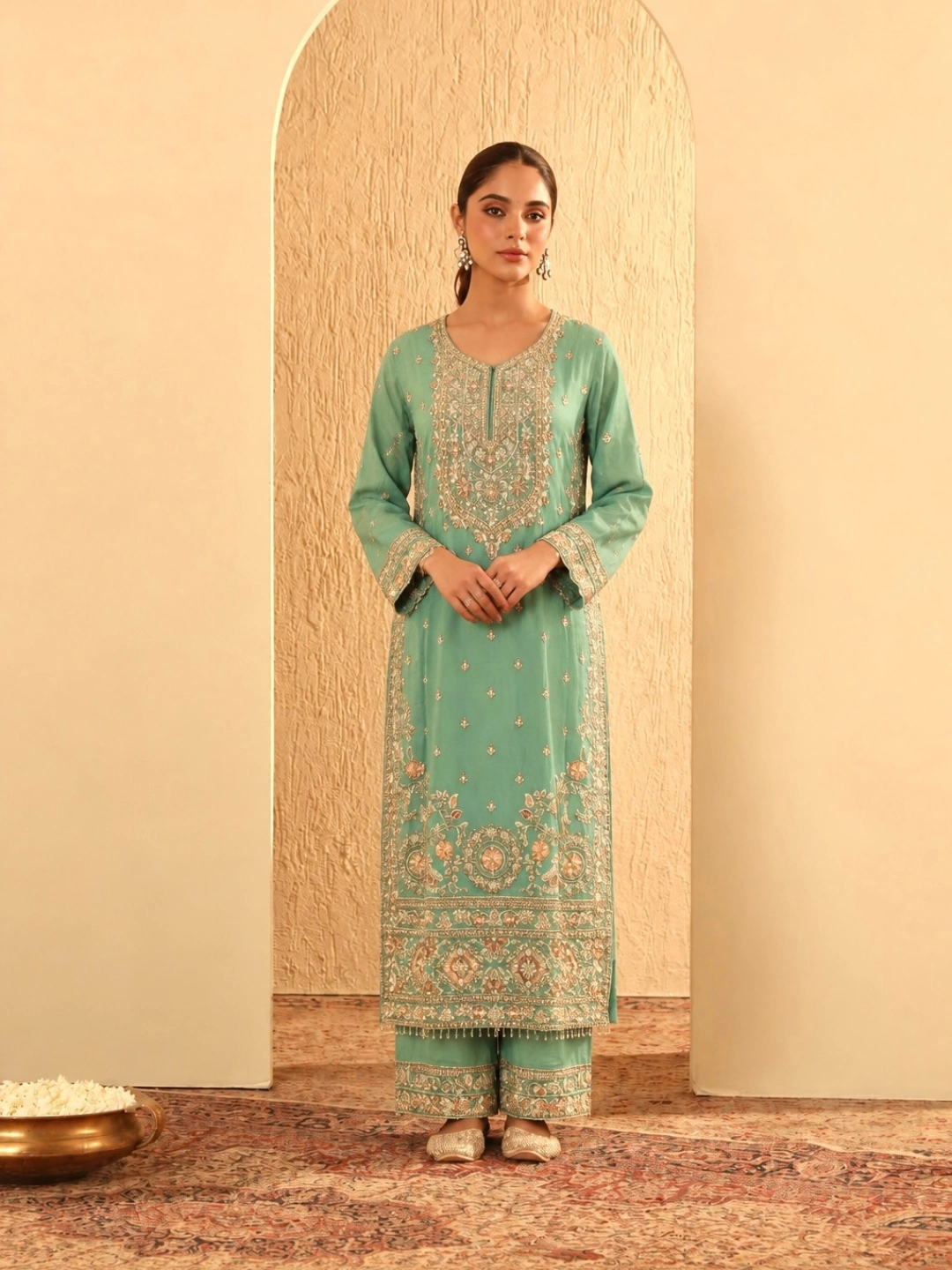
The Teal Suit Worthy of Displaying
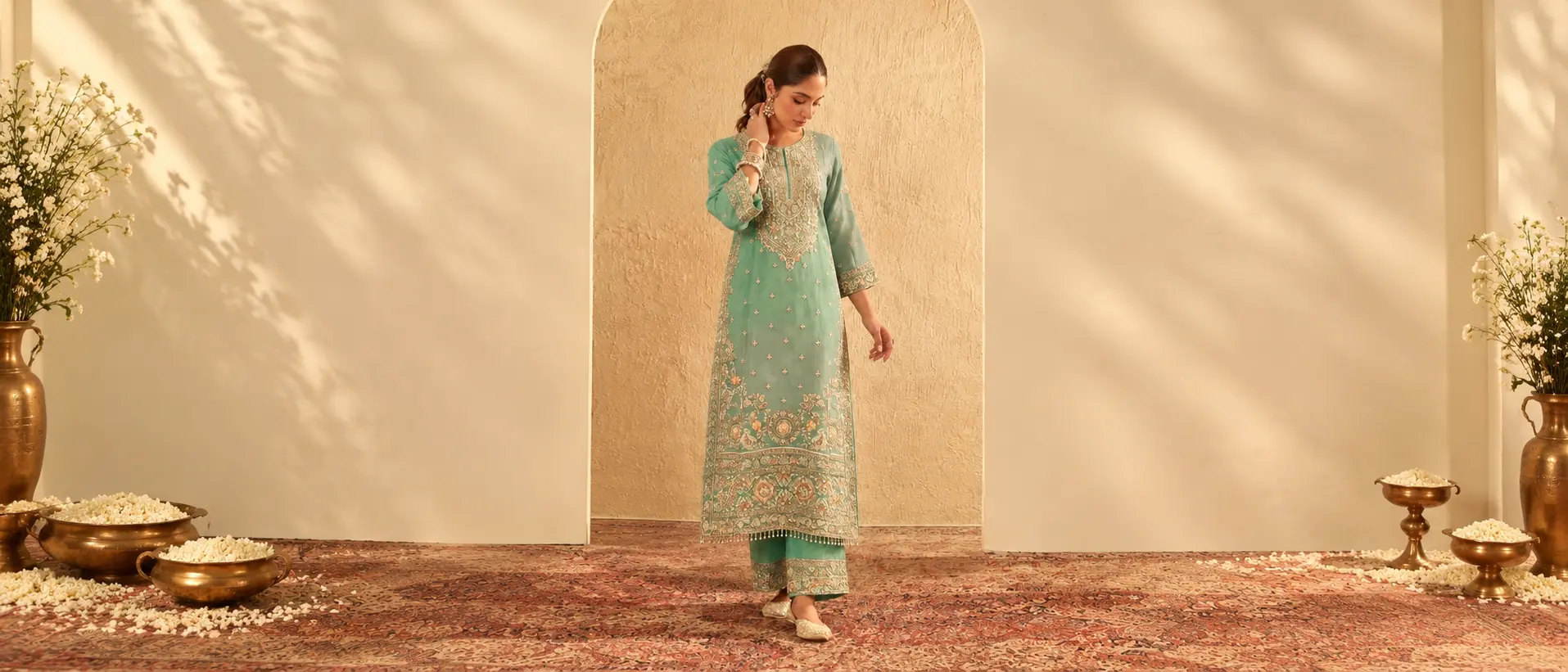
In this regard, the Teal Bridal Kurta Set is no different. Teal green tissue silk provides the base material. It features dense scatterings of floral motifs with heavy embroidery in gold and copper, with zardozi, cutdana, sequin and thread embroidery. The hem is edged with pearl beads and bead tassel trim. A matching dupatta completes the outfit. This suit is designed to be displayed in front of an audience in the room. Storing the outfit in the closet is a betrayal of its very purpose. And yet that is what many of these outfits are doing.
Orange Festive Suit That Has No Place to Go
The Orange Festive Suit is a tissue silk suit in bright orange colour with heavy zardozi, sequin cutdana, and dabka embroidery flowing in gold and copper colours. It has scalloped borders with beaded tassels hanging from its hemline. The embroidery also extends on the sharara until the ankles. This is a suit with royal simplicity that is being worn to no function at all. Because it is just waiting for the right function to come, and it is probably some cousin's engagement party or Diwali dinner party or maybe some mehendi function. But definitely not some state banquet. Something that is happening in real life regularly.
The Mustard Suit and the Boldness of Wearing It
The Mustard Yellow Festive Suit has gold and copper zardozi, sequin cutdana, and dabka embroidery bordered by scallops. Beaded tassels fall from the hem. The sharara has its own embroidery near the ankle, and the dupatta has its own border. This is a suit made for wearing at a sangeet, a reception, Diwali festivities in the family, or any other wedding function. It is not meant to remain forever on a shelf in your closet. The boldness to wear it at the next available opportunity instead of waiting for the ideal time is what it requires.
The Navy Suit that Photographs Best in Action
The Navy Blue Heavy Work Suit has an all-over sequin and kora embroidery with medallion and floral designs on deep blue silk crepe. The gold embroidery looks different in every kind of light. That characteristic is discernible only when it is worn in different light conditions in different spaces. It remains invisible on the hanger kept in the wardrobe. The craftsmanship in the making of such an item has been intended to be appreciated in motion, under light, and by people in the same space.
The Permission You Were Looking For
Dress yourself in the outfit. Not for the mythical event, which will be perfect for it, but the real one coming next. The dinner at your home, which is a bit more formal than what you usually have. A wedding ceremony of a friend. A Diwali party at your relatives’ home. The sangeet, which wasn’t certain about whether it was formal enough. These are the events this outfit was designed for. The artisans who laboured long on it did not design it to be kept wrapped up in tissue paper. The Gulbhahar Collection designs things that are meant to be worn.
Tags
Frequently Asked Questions
What makes people purchase outfits but not use them?
The brain starts defending the beautiful or costly outfits by making the brain believe that these outfits should be used only for the perfect future occasion. And such a perfect occasion just keeps rising till nothing else comes at par.
Would storing the outfit protect its integrity?
Absolutely not, perhaps. The tissue silk may crease itself by being stored for long times. The embroidery on the dress may come loose. Sometimes, it is advisable to let the dress have a properly made ethnic outfit rather than store it forever.
For which occasion can we use the bridal level of ethnic suit?
For occasions that make you feel well-dressed and suitable. No matter whether it is a sangeet or reception, or a Diwali function. You may not need the best occasion, but you just need a true one.