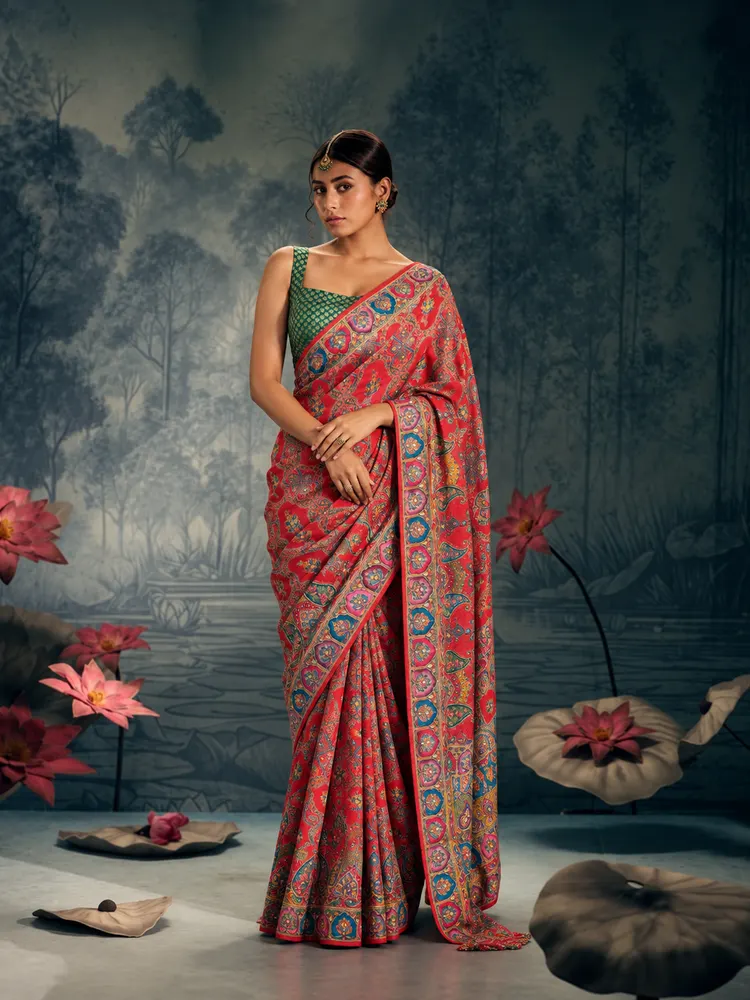
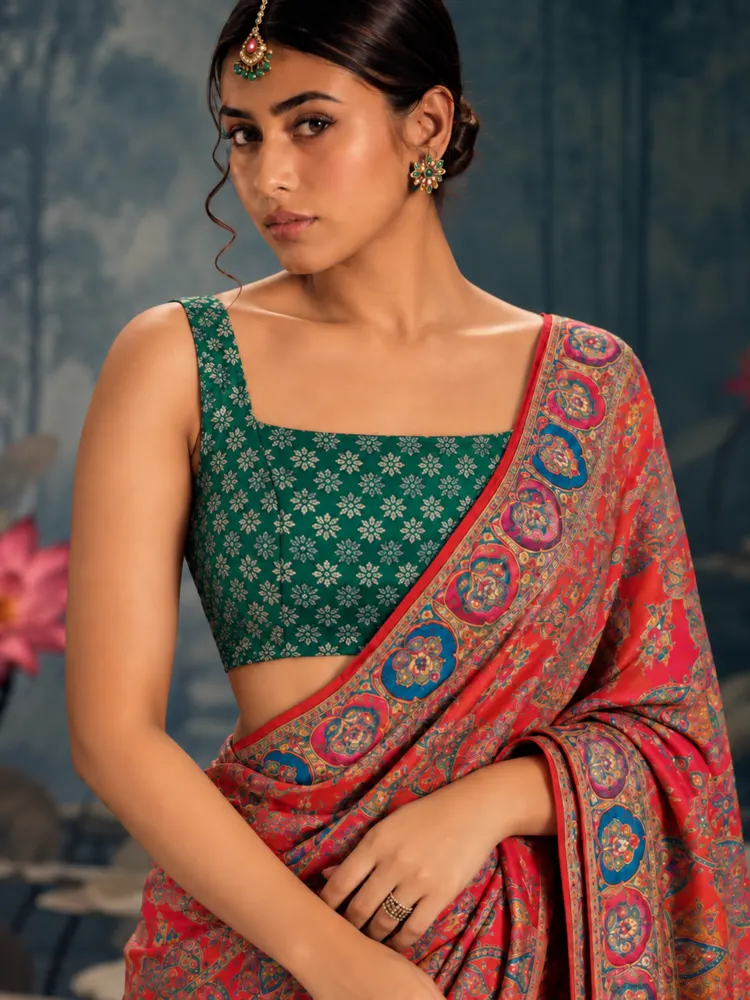
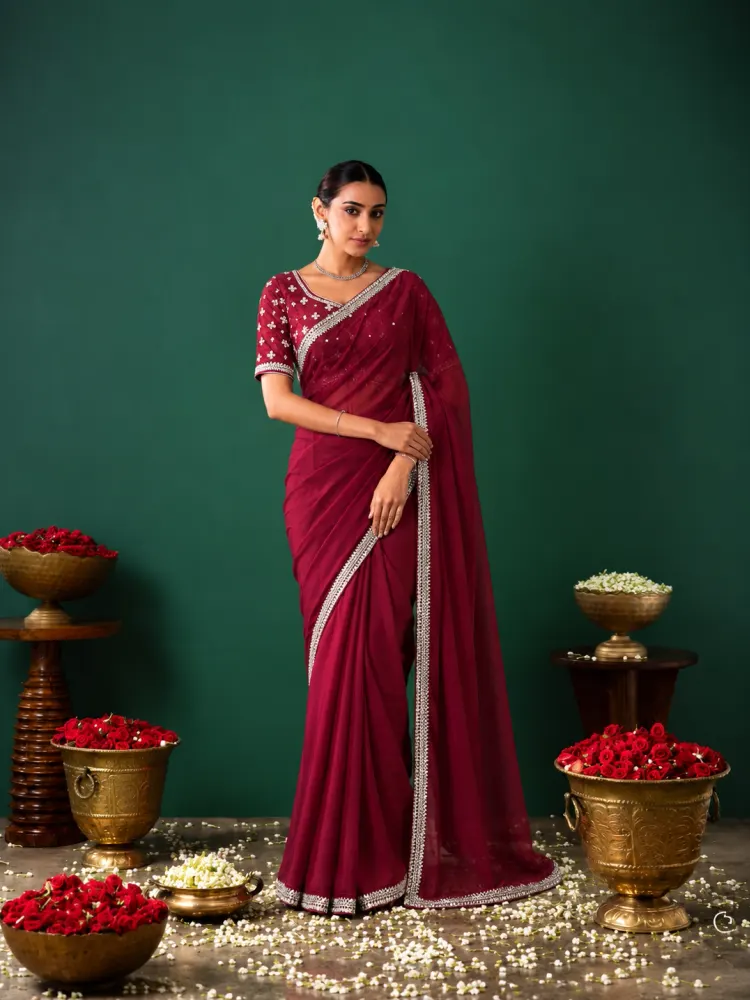
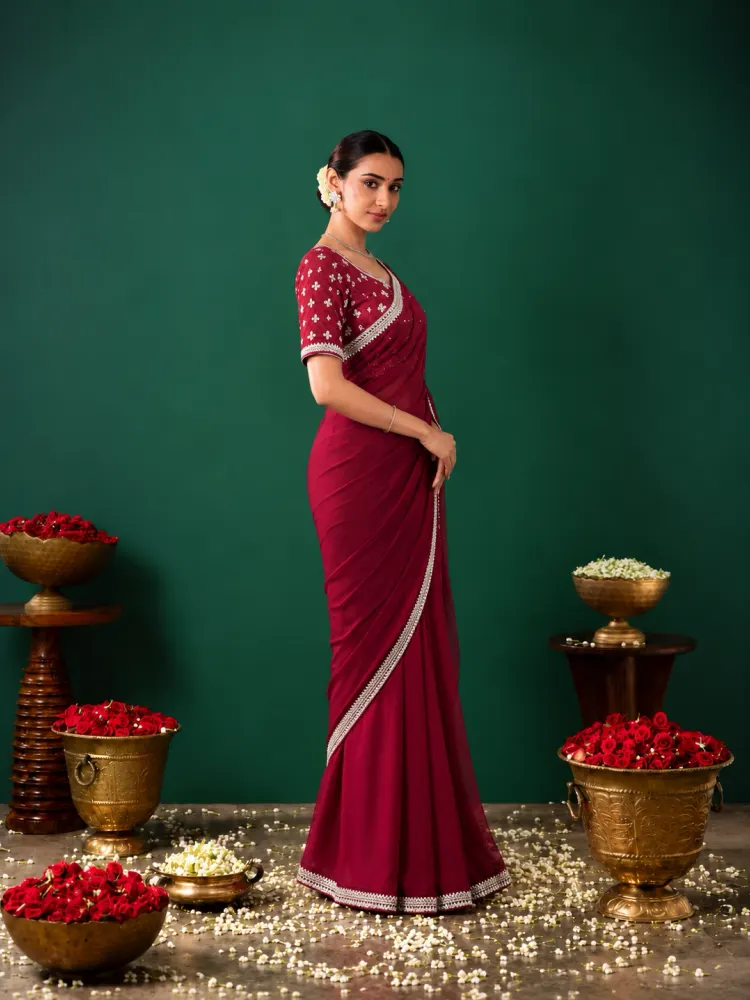
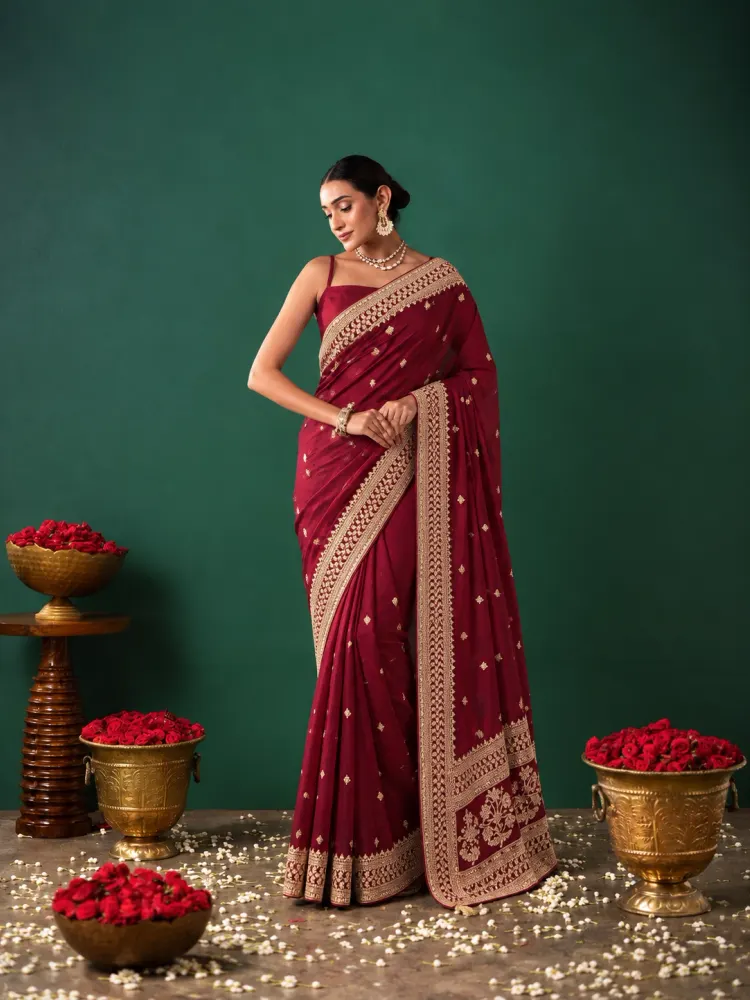
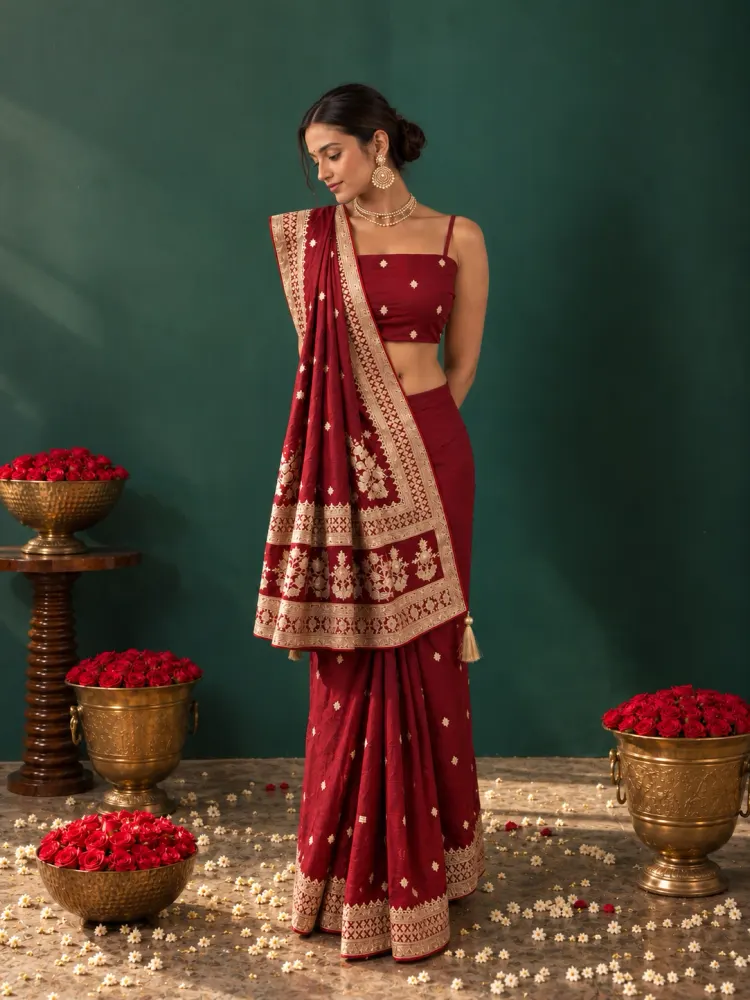
Brasso Ki Sadi | Gulbhahar | Premium Members only
Read more ▼See less ▲
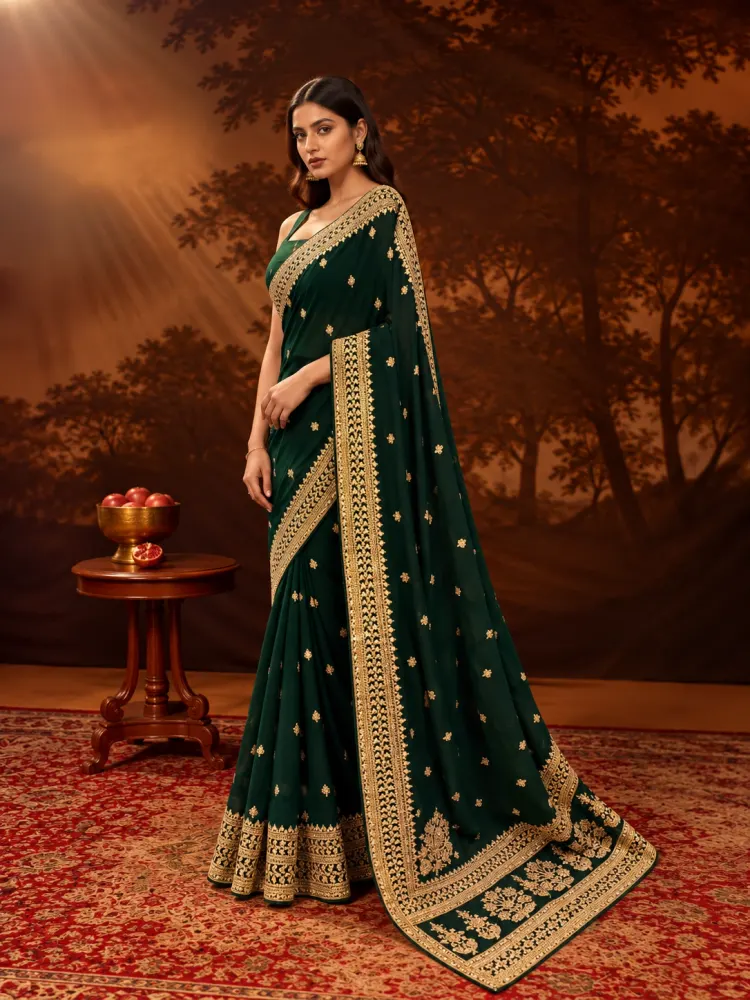
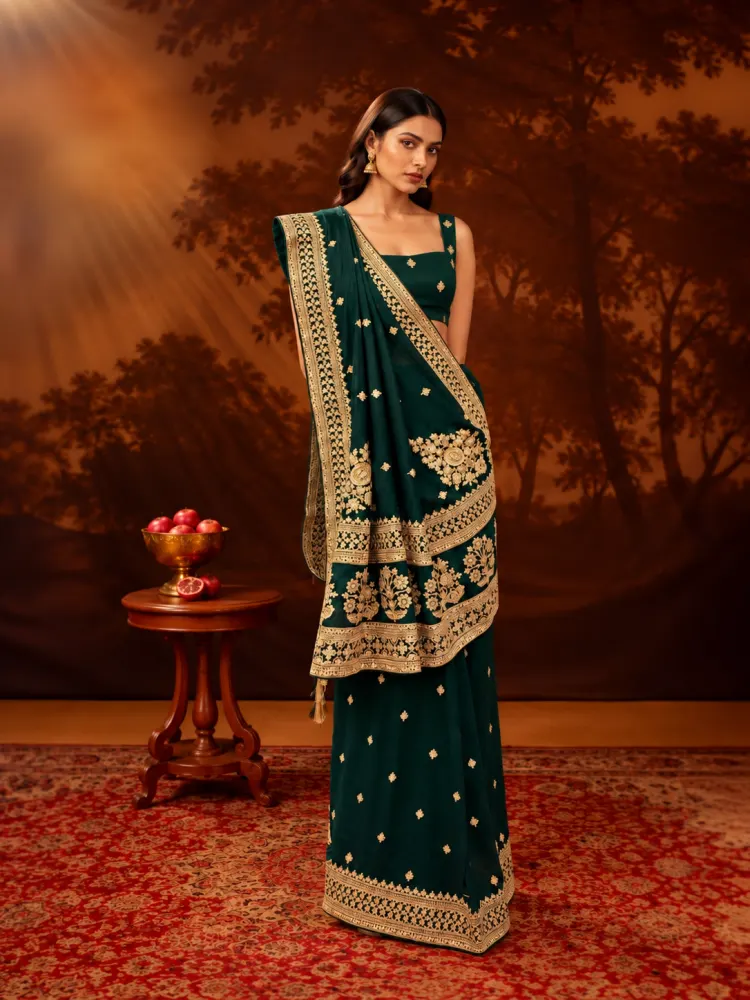
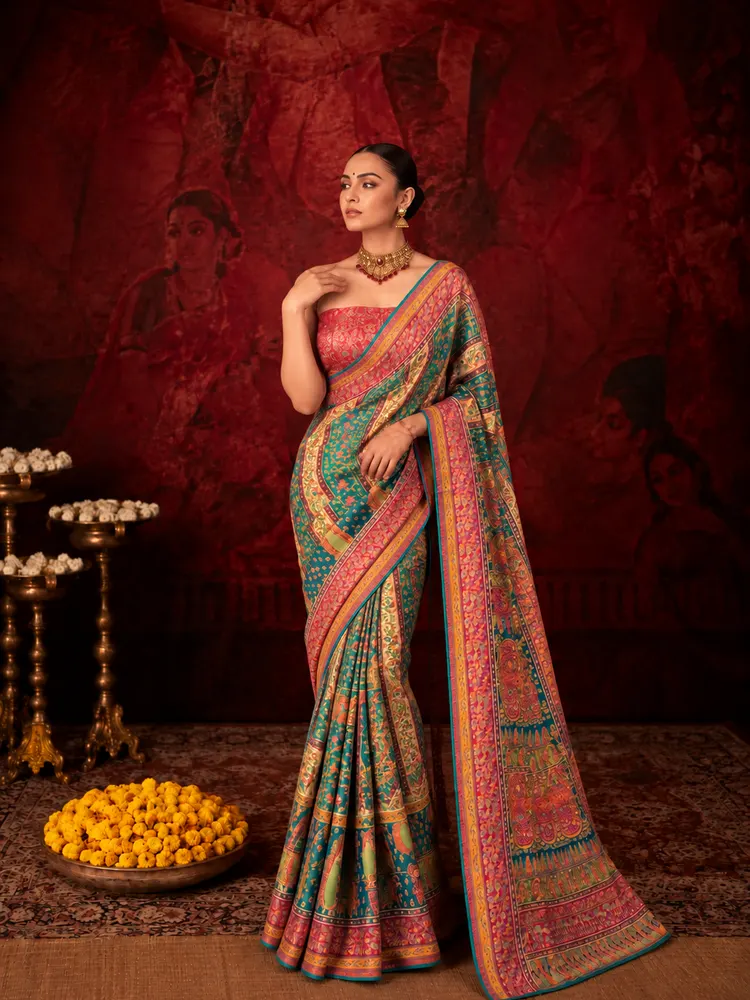
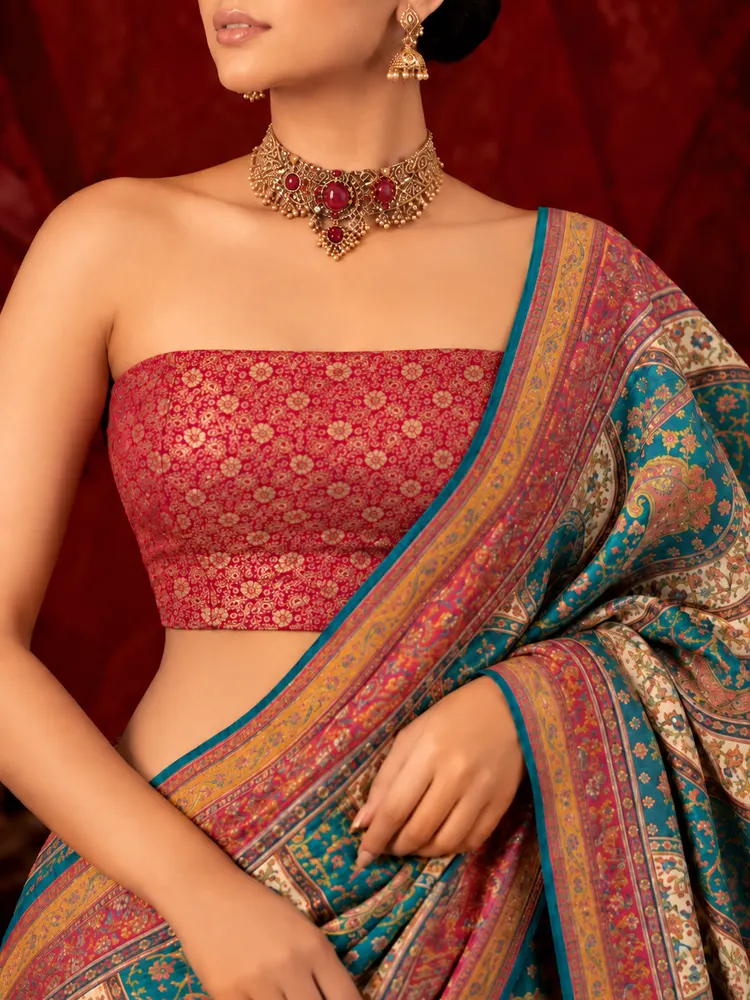
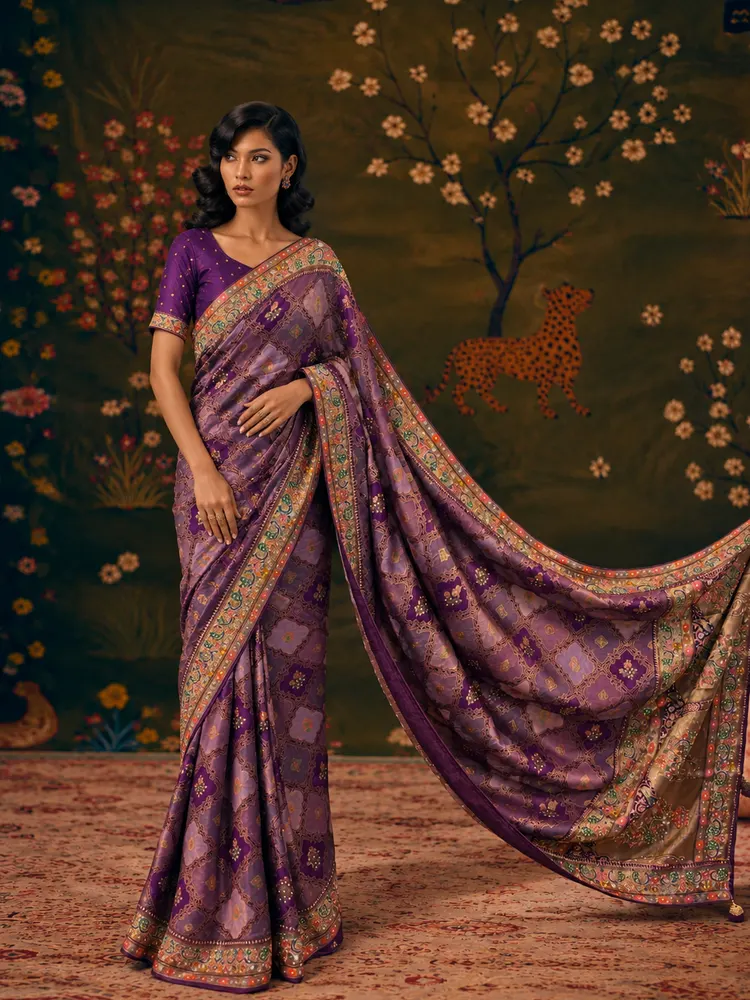
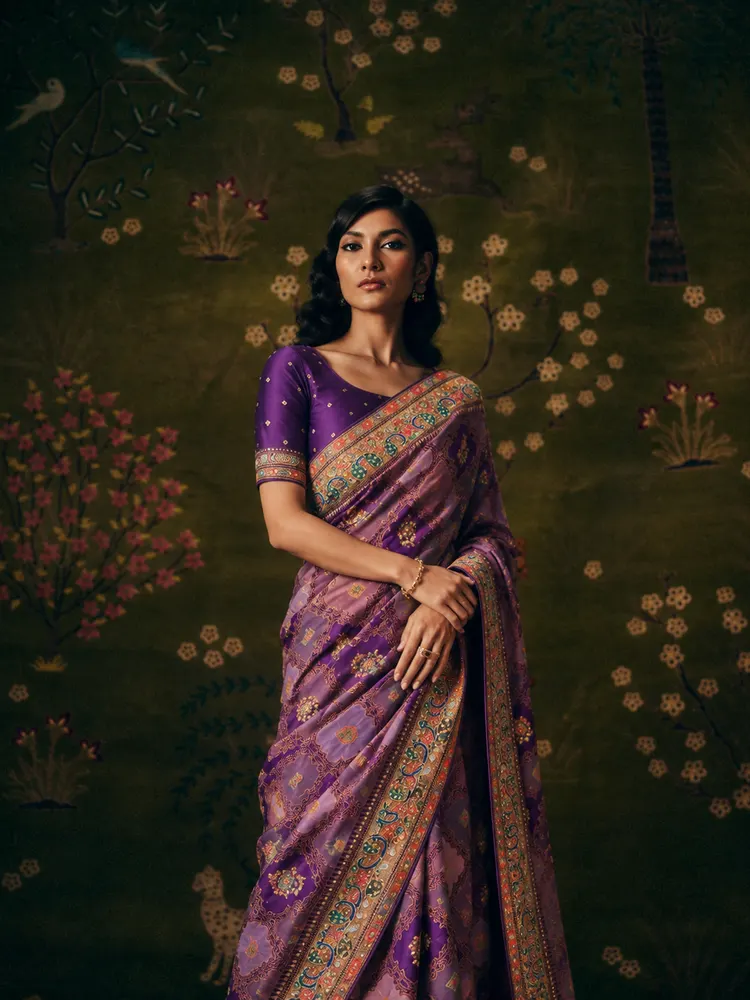
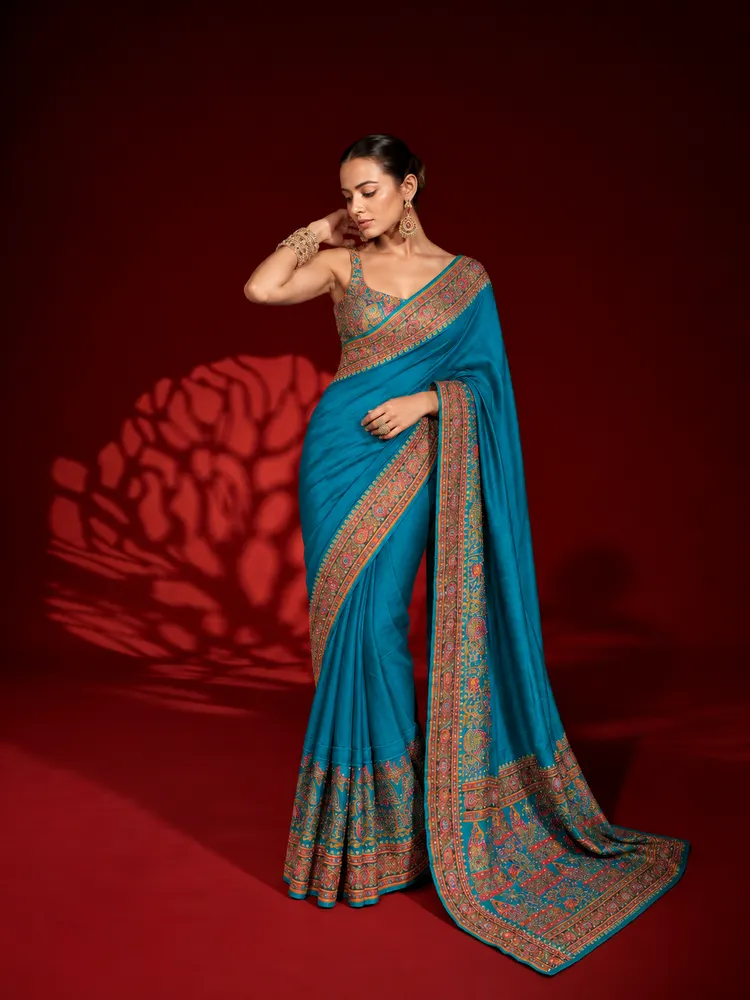
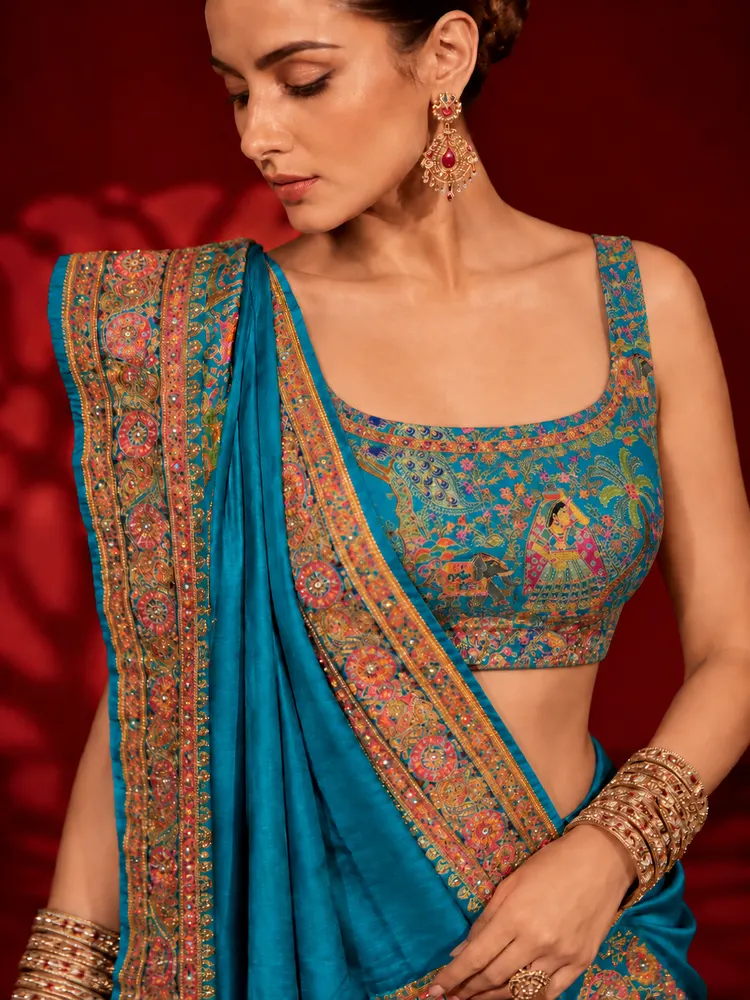
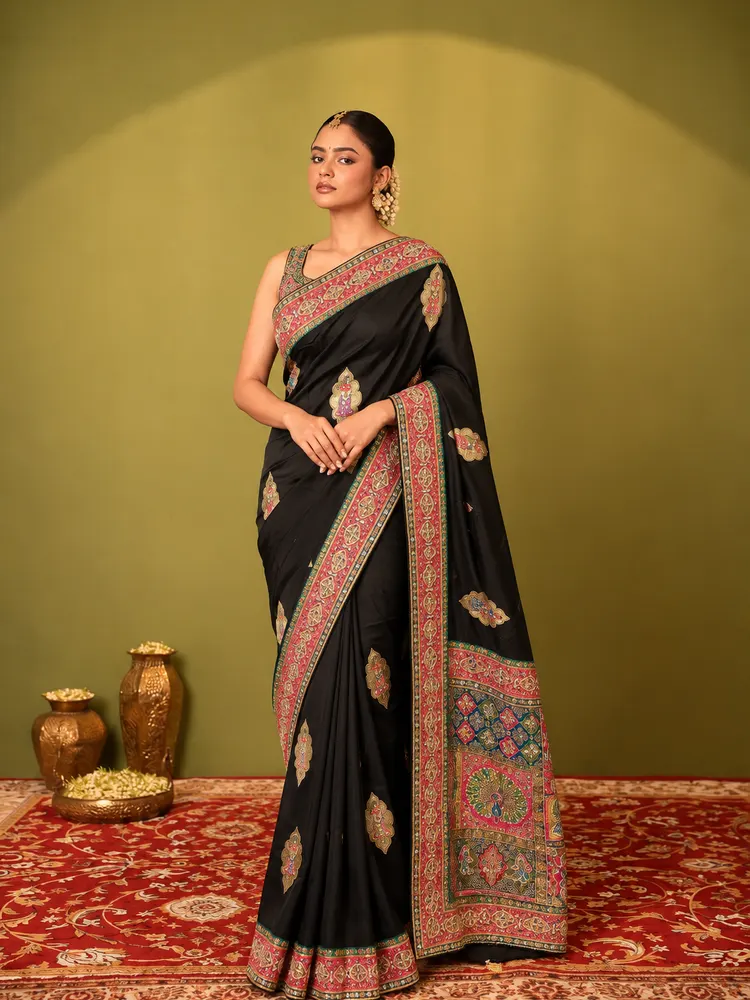
At Gulbhahar, our Brasso Ki Sadi is a symbol to classic art and artisan skills passed down through generations. This graceful outfit set features the essence of feminine modesty and grace, making it an ideal choice for family gatherings and cultural celebrations. This fine piece combines style and fineness with its detailed designs and bright colors, reflecting the richness of Indian traditions. The enduring appeal of Brasso Ki Sadi lies in its ability to adapt to current trends while staying true to its roots. Styling for old occasions is effortless with Brasso Ki Sadi. Pair it with complementary jewellery and accessories to enhance your look, making you the showcase of dignified elegance. Embrace this striking masterpiece and carry forward the roots of Indian history with pride and confidence.
Lasting Tradition in Every Stitch
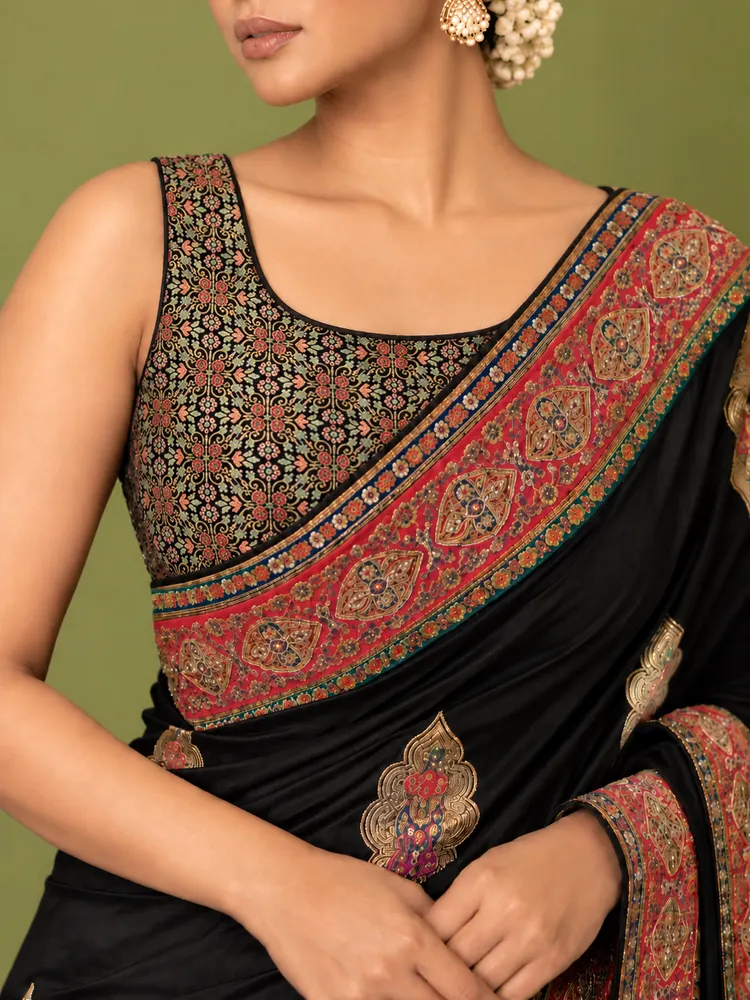
Gulbhahar's 'brasso ki sadi' is an embodiment of India's rich textile roots, with each piece thoroughly crafted by skilled workers who have honed their skills over generations. The complex patterns and the light sheen of the brass wire zari work are a symbol to the dedication and clean finish that goes into creating these lovely sarees.
Mastery: A Crafted with love
The 'brasso ki sadi' is a culmination of generations of skill and creativity. Each saree is woven on customary handlooms, with the fragile zari work woven into the fabric itself, not merely embroidered on. This way, known as 'zari brocade', is a rare and ancient technique that Gulbhahar's skilled workers proudly preserve. 'Emphasize': Every 'brasso ki sadi' is a blend of workmanship that echoes through generations.
Celebrations of Life: From Festivals to Weddings
'Brasso ki sadi' is not just a saree; it's a story woven into every thread. It's the radiance you wear during Diwali, the festive spirit you embody at Eid, and the grace that adorns your wedding day. Whether it's a family gathering or a grand festival, 'brasso ki sadi' is a showcase to our cultural past and traditions.
Design Tradition: Motifs That Tell Our Story
'Brasso ki sadi' bears designs that are deeply rooted in Indian history. The fancy 'boteh' or paisley patterns symbolize life's cyclical journey, while the lotus motif signifies purity and enlightenment. Other customary elements include 'chandrakala' (moon and star), 'bel' (the wood apple tree), and 'lotus and scroll'. 'Tags': Boteh, Lotus, Chandrakala.
Boteh (Paisley) | Lotus motif | Chandrakala | Zari brocade
Grace Personified: Modesty in Elegance
'Brasso ki sadi' represents the essence of Indian womanhood - graceful, modest yet refined. The saree's pallu, finished with zari work, is designed to fall elegantly when draped, adding an aura of ageless grace. It's not just a garment; it's a reflection of your inner beauty and poise.
Honoring Tradition: A Melody of Values
'Brasso ki sadi' is more than just a saree. It's a celebration of our cultural gift, 'keyValues': 'Folk value': It represents the virtue of patience and perseverance through its fancy experience; 'Cultural side': It signifies our rich textile history and the skill of our ancestors.
- Patience & Perseverance:
- Traditional value through intricate craftsmanship
- Textile Heritage:
- Rich history of ancestral skills
- Zari Brocade:
- Ancient weaving technique preserved
- Brass Wire Artistry:
- Luminous sheen through metalwork
Generations United: Classic Tradition, Enduring Bond
'Brasso ki sadi' is a lasting tradition that unites generations. From grandmothers to mothers to daughters, each wears it with pride and passes down the art of draping this lovely saree. It's not just an heirloom; it's a expression to our shared history and cultural roots.
Regional Pride: A Blend of Cultures
'Brasso ki sadi' is inspired by the rich cultural roots of India. The saree's design integrates elements from some regions, such as the 'boteh' from Persia, the 'bel' from Bengal, and the fancy zari work from Banaras. It's a smooth blend of traditions that celebrates our wide-ranging cultural cloth.
Frequently Asked Questions
How can I style my brasso ki sadi for a classic wedding ceremony to honor the bride's elegance and grace?
For a ancestral wedding ceremony, you can drape your brasso ki sadi in the classical Gujarati or Rajasthani style. Pair it with jewellery like jhumkas, a maang tikka, and a waist belt to emphasize the bridal glow and bring out the enduring elegance of this ethnic wear.
When is it most appropriate to wear my brasso ki sadi during festivals like Navratri or Diwali?
Brasso ki sadi is perfect for auspicious occasions such as Navratri and Diwali. During these festivals, wearing bright colors like red or yellow signifies joy and prosperity. You can also customize the design with customary embroidery to represent your family's cultural tradition.
What are some of the artisan mastery details in a brasso ki sadi that celebrate Indian traditions?
Brasso ki sadi often features fine handwork like zari embroidery, mirror work, and gota patti. These past design elements present the skill of local makers and symbolize feminine grace and modesty. Each piece tells a story of Indian past, making it an heirloom for generations to come.
Keywords
Brasso Ki Saree | Brasso Ki Sari | Brasso Ki Sadi | Brasso Ki Saadi | Brasso Ki Saari | Brasso Ki Sadee | Brasso Ki Sadhi | Brasso Ki Sarees | Brasso Ki Saris | Brasso Ki Sadis | Brasso Ki Saadis | Brasso Ki Saaris | Brasso Ki Sadees | Brasso Ki Sadhis | buy brasso ki sadi online | brasso ki sadi online shopping | shop brasso ki sadi online india | original brasso ki sadi online | best website to buy brasso ki sadi | brasso ki sadi with blouse online | brasso ki sadi free shipping india | affordable brasso ki sadi online | premium brasso ki sadi online | brasso ki sadi price | brasso ki sadi under 2000 | brasso ki sadi under 3000 | brasso ki sadi under 5000 | cheap brasso ki sadi online | best price brasso ki sadi | budget brasso ki sadi | brasso ki sadi sale | discount brasso ki sadi online | latest brasso ki sadi offers | bridal brasso ki sadi | wedding brasso ki sadi | red brasso ki sadi for bride | designer bridal brasso ki sadi | traditional brasso ki sadi for marriage | brasso ki sadi for reception | latest brasso ki sadi designs | trending brasso ki sadi | modern brasso ki sadi | stylish brasso ki sadi for women | new collection brasso ki sadi | celebrity style brasso ki sadi | lightweight brasso ki sadi | party wear brasso ki sadi | handloom brasso ki sadi | real zari brasso ki sadi | katan silk brasso ki sadi | organza brasso ki sadi | georgette brasso ki sadi | authentic brasso ki sadi online | buy brasso ki sadi under 3000 online | best brasso ki sadi for wedding under 5000 | lightweight brasso ki sadi for summer | pure silk brasso ki sadi online india | affordable bridal brasso ki sadi | brasso ki sadi for festivals online | daily wear brasso ki sadi lightweight | brasso ki sadi online india free delivery | brasso ki sadi online india | brasso ki sadi near me | brasso ki sadi delhi online | brasso ki sadi varanasi original | indian brasso ki sadi online