Filters
Size
Color
Fabrics
Collections
Price
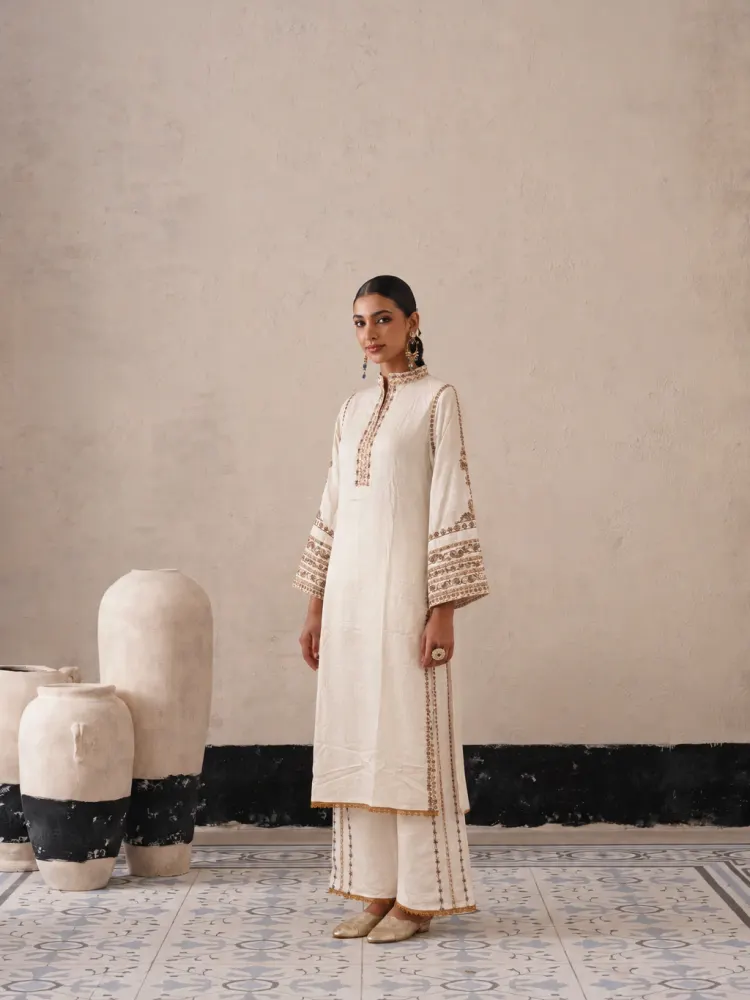
Black White Suit: Which Black White Suit Keeps Both Tones True
The figure to know here is ₹3,875. It is the same for every piece in this black white suit collection, which takes the guesswork out of choosing between a pale set and a dark one.
A fixed price is unusual in ethnic wear, where embroidery often decides the number. Here the work varies and the figure does not.
That makes the decision a simple one: pick the shade you will wear most and the cut that suits your day.
Why One Price Holds
We set the line at a single figure so the collection can be compared on cloth and cut. A white cotton set and a worked piece cost the same, and neither carries a premium for size. Small batch production makes that possible, since nothing is ordered in the thousands.
Inside the Fixed Price
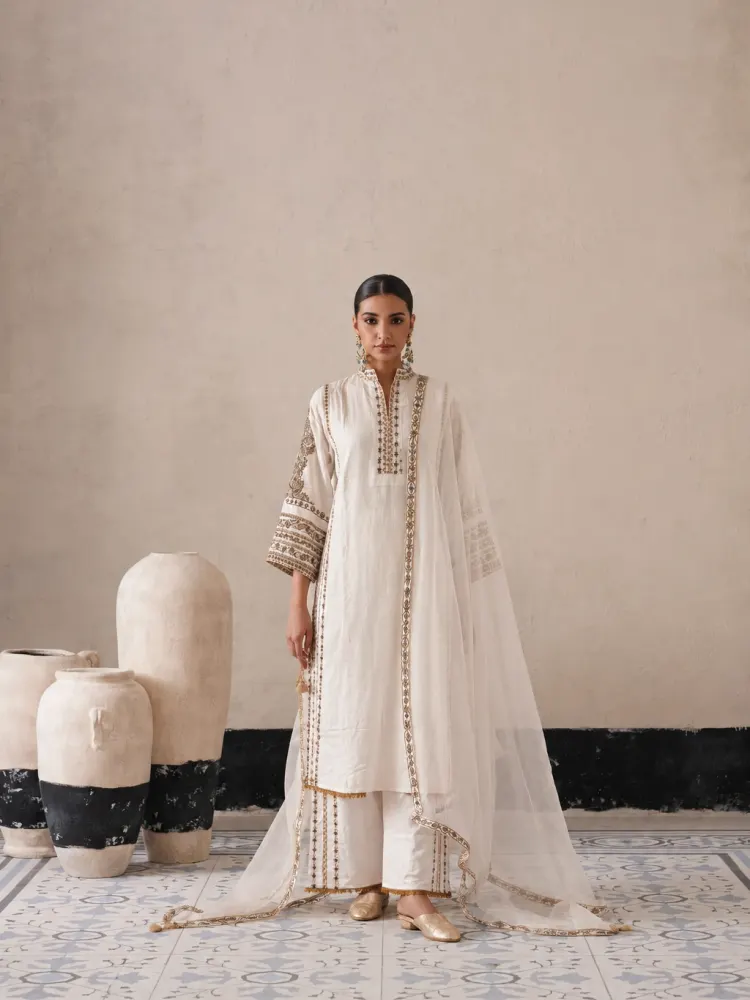
The price covers the full set: kurta, bottom, dupatta and the finishing at the neck and sleeve. The Women Ethnic White Suit arrives with a matching dupatta, and the Cotton Blend Kurta Set is the plainer cut for everyday wear. Both sit inside the same figure.
Cotton Blend and How It Wears
A cotton blend keeps the breathability of cotton and adds enough body to hold a shape through a long day. It creases less than pure cotton at the elbow and takes a press quickly. The white pieces are lined through the body so the weave does not show.
Building the Two Tone Look
Let one half of the outfit carry the dark note. A white suit with a black dupatta, oxidised silver jewellery and a dark sandal reads graphic without trying. In reverse, a dark kurta with an ivory bottom is softer and better for a morning event.
Washing a Pale Set
Wash the pale pieces from this black white suit line separately in cool water, and skip the bleach, which yellows a cotton blend over time. A spoon of baking soda in the rinse lifts grey. Dry in shade and press the dupatta on a low setting so the edge does not shine.
Where the Pair Fits In
Office days, a pooja at home, a family lunch and a mehndi all sit inside this line. The white pieces lean formal when paired with a dark dupatta, and the plain set works for a long day of errands and visits. A dark sandal keeps the white from looking too summery.
A note from our studio
One price for a two tone set is where corners get cut, and the usual trick is a pale piece from cheaper cloth than the dark one. I buy both from the same quality and stitch them in one unit, checking the weight by hand before packing. I cut the pale piece with a little more room and a deeper hem, since white shows marks and may need to be let down. Balance was the problem, because a white kurta with a dark dupatta can look top heavy, so the work stays light and the lines clean. Shrinking decides the set, and a pale cloth that draws in will pull the dark out of shape. Wash the white piece alone first. If it changes, tell me. I, Monica Bhardwaj Gulati, will not sell halves made to different standards.
Frequently Asked Questions
Is the dupatta included at this figure?
It is, for every set in the line. The listing photo shows the dupatta that comes with each piece, so check that image before you choose.
Does the price change with size?
No. Every size in the black white suit collection is ₹3,875, from the smallest to the largest.
Will a cotton blend shrink after the first wash?
A little, if it meets hot water. Cold washing and shade drying keep the change under a centimetre, and a warm iron eases the seam back. Line drying also keeps the shape at the shoulder.
How do I stop the white from looking grey?
Wash it apart from colours and rinse with a little baking soda. Store it away from sunlight, which dulls white cloth faster than any wash.
Can the set be split and worn as separates?
It can, and one set often covers more of the week that way. The kurta works with jeans and the bottom with a plain tunic, which stretches one price across more outfits.
Is the work on the neck machine or hand done?
The fine work is hand done in small batches, and the straight seams are machine finished. Expect slight differences between two pieces for that reason.