
Introduction
The presence of heavy embroidery can also be taken as an indication of the quality of clothing. People tend to think that the greater number of threads that go into the embroidery, the higher the quality of the garment. The same holds true for silk sarees, suits, and Indo-Western clothing when shopping. But in truth, quality is determined by many factors other than the amount of embroidery present on a piece of clothing. Precision, finishing and fabric strength are some things that play a bigger part in determining the quality of clothing. Juttis and ethnic bags face similar assumptions, where heavier detailing sometimes overshadows actual craftsmanship. Gulbhahar's Collection of sarees and suits proves that real quality lies in the details. Does heavy embroidery truly reflect better quality, or does that belief need rethinking?
Where This Assumption Comes From
The use of heavy embroidery has been synonymous with luxury, tradition and intricate craftsmanship over the years. Wedding and ceremonial outfits typically feature heavy embroidery stressing the visual impression. In the past people associated heavy embroidery with heavy work and great value. It made sense in the past because beautiful embroidery really required a lot of work. However, today the way embroidery is being done and applied is completely different. The Rani Pink Heavy Sharara Suit carries its own aura through its embroidery. This shift means heavy embroidery no longer automatically guarantees the same level of craftsmanship.
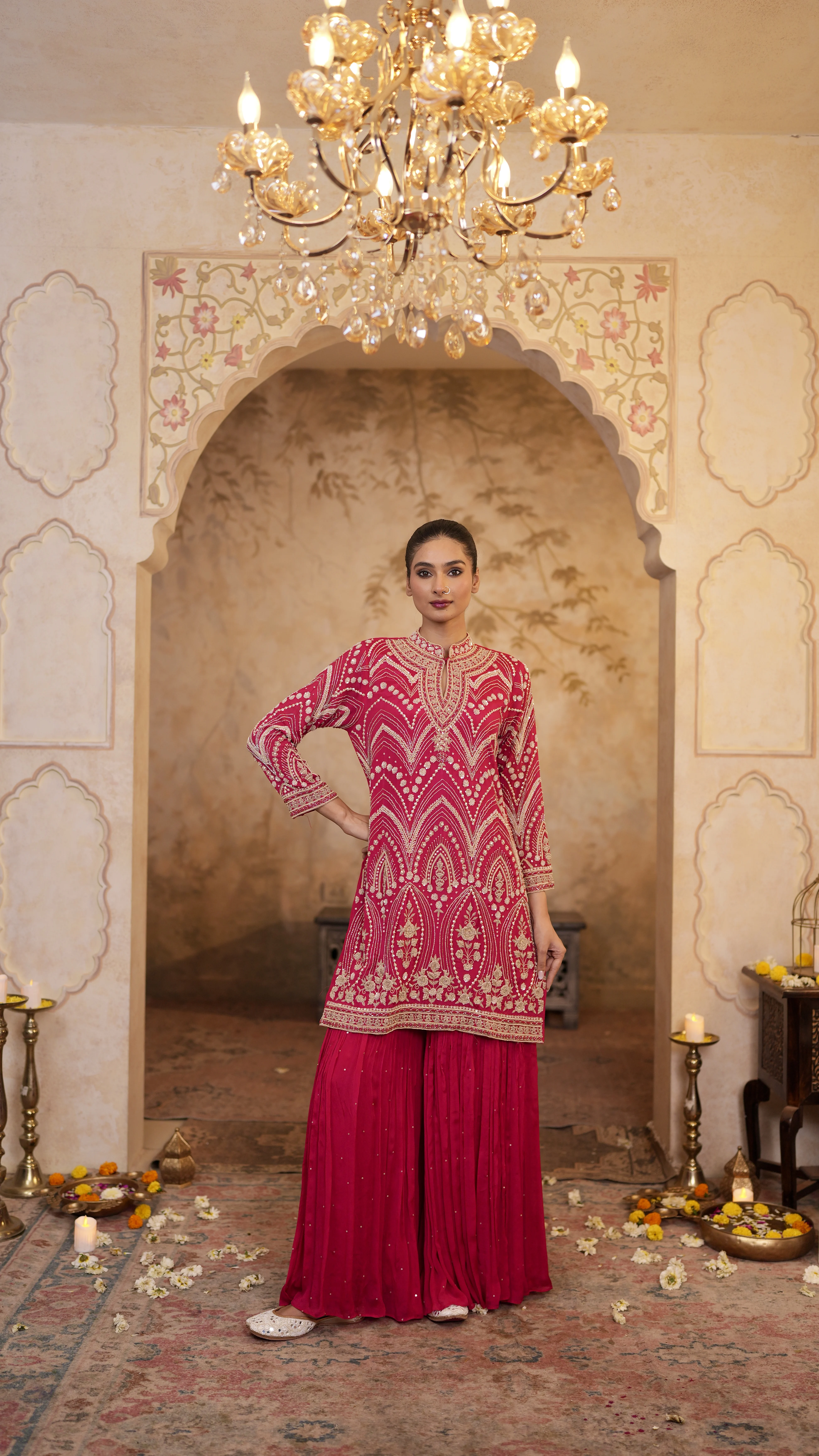
What Actually Determines Quality
Several things come into consideration when it comes to quality in silk sarees and Silk Suits. The strength of thread used, the accuracy of stitching, and the durability of fabric all come into play. The neatness of embroidery and seam work usually points towards a high-quality product more often than not. The Rani Pink Tulip Suit shows how this quality gets determined. Even something without much embroidery on it could be a high-quality one. It is useful to know all this so that the emphasis is not always placed on the amount of embroidery. True quality often reveals itself through finishing rather than sheer visual density.
Signs of Genuine Craftsmanship
Recognising genuine craftsmanship requires looking beyond how much embroidery an outfit carries. In order to be able to identify authentic craftsmanship, it is necessary to do more than just consider the quantity of embroidery on a piece of clothing. These small details can convey more about craftsmanship than the amount of embroidered pieces ever could. Genuine craftsmanship shows up in precision, as in Sea Green Farshi Suit , and not necessarily in volume. There are ways to distinguish quality embroidery from purely decorative excess.Carefully aligned patterns and balanced threadwork reflect the attention and expertise invested in every stage of the embroidery process. A thoughtfully crafted outfit stands out through its refined finish rather than excessive embellishment.The quality of the thread plays an important role in determining the overall finish and longevity of the embroidery. Clean and secure stitching on the reverse side is often a sign of careful handwork and attention to detail
Check for even, consistent stitching without visible loose threads.
Look closely at how embroidery lies flat against the fabric.
Check if motifs align symmetrically across the outfit's design.
Notice if embroidery threads match the fabric's overall colour tone smoothly.
Assess how the fabric feels underneath the embroidered sections.
Why Minimal Embroidery Can Still Mean High Quality
Designs in Patiala Salwar Suits that have very little embroidery use other features in the design to make the design appear of high quality. This includes good stitching, good fabric, and tailoring, among others. The same is applicable to Indo-Western wear. High-quality and well-tailored designs with little embroidery will appear to be as expensive as those with lots of embroidery. The Rani Pink Suit Women in the collection can attest to that fact. This means that craftsmanship need not be elaborate to be considered of high quality. Choosing minimal embroidery does not mean settling for lower quality overall.
Heavy Embroidery and Practical Considerations
There is also practicality associated with the heavy embroidery, which plays a part in making it a suitable choice for wearing on a daily basis. Suits and sarees with heavy embroidery are more difficult to handle and take good care of. Therefore, there are some difficulties associated with heavy embroidery due to its practicality. Similarly, juttis and bags with excessive embroidery may feel less durable over time. Considering practicality alongside quality helps guide more balanced purchasing decisions. Heavy embroidery should feel like a deliberate choice, not an assumed marker of value.
How This Applies to Accessories
Assumptions about embellishments made on juttis and ethnic bags tend to be the same. An excessively decorated jutti does not necessarily mean that its quality is higher. Inspecting the stitching, sole, and material strength would be a better criterion to evaluate the quality. Excessively embroidered ethnic bags may even reduce their durability. It would allow evaluating accessories in a way that does not let people pay excessively for embelishment lacking real workmanship. This approach applies the same quality principles across both outfits and accessories.
Rethinking How We Judge Quality
The consideration of volume is shifted away for a more critical analysis of quality. All types of garments, including sarees, suits, and Indo-Western wear, can gain from such a shift. Careful attention to stitching, fabric strength, and finishing results in a more informed choice in the purchase process. Juttis and ethnic handbags must receive an equal measure of scrutiny when not being seen as visible embellishment alone. Overall, this attitude would help assemble a wardrobe with quality as a key factor. Rethinking these assumptions leads to better long-term value across ethnic wear purchases.
Final Thoughts
It should be noted that heavy embroidery is not always an indicator of good quality as often perceived by people. In reality, good quality relies more on the accuracy of the stitches, the durability of the fabric, and other finishing touches. Silk sarees, suits, and Indo-Western apparel, for example, can all possess high quality even with little embroidery done on them. Juttis and ethnic bags deserve the same careful evaluation beyond embroidery volume alone. Gulbhahar's craftsmanship speaks for itself. These distinctions help build a wardrobe based on genuine value rather than visual excess.
Tags
Frequently Asked Questions
What are the real signs of genuine craftsmanship?
Even stitching, symmetrical motifs and embroidery that lies flat against the fabric indicate genuine craftsmanship, regardless of embellishment volume.
Can minimal embroidery still reflect high quality?
Yes, suits and sarees with minimal embroidery can reflect high quality through fabric, tailoring and clean finishing.
Why does heavy embroidery require more maintenance?
Dense embellishment often requires careful handling to prevent thread damage, making it less practical for frequent everyday wear.
