.webp?v=1793175666556)
Introduction
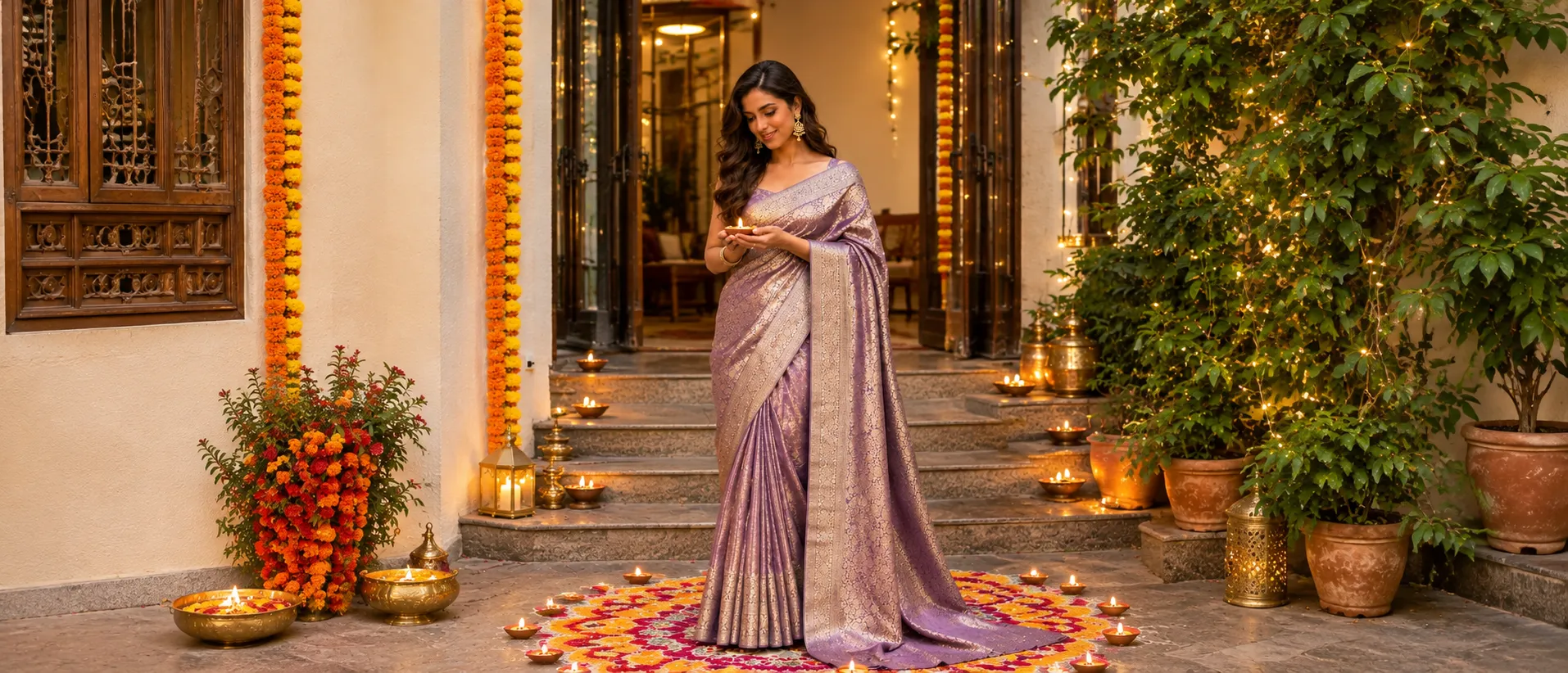
November is very hectic. Dhanteras will be on 6th November, Diwali will come on 8th November, Bhai Dooj will follow soon after, and Tulsi Vivah is coming up on 21st November, as the wedding season starts. Buying a new suit for each occasion becomes very costly and is not even necessary. The right thing to do is to buy a few nice suits and style them differently. This is what we do at Gulbhahar every season, and here are seven easy ways to do so, with five festive suits as examples.
1. Change the Dupatta, Not the Suit
A dupatta is the quickest way to give a new mood to one suit. The White Festive Suit is the perfect base for that, as white is a blank slate which goes with everything. You can wear it with a maroon dupatta for the Dhanteras puja, mustard for Bhai Dooj, and dark green for an evening visit. Keep the same jewellery, and your outfit looks different in each picture.
2. Match the Colour to the Day
Let your celebration dictate what shade you use. Colours that can be described as warm, sunny shades are appropriate for daytime parties, while colours of darker hues should be worn to night events. The Mustard Yellow Festive Suit is designed to be worn during daytime celebrations. As mustard colour shines bright during the day and complements gold jewellery, it can be worn during Govardhan Puja in the morning, Bhai Dooj during lunch or on any other family visit.
3. Let Your Jewellery Set the Mood
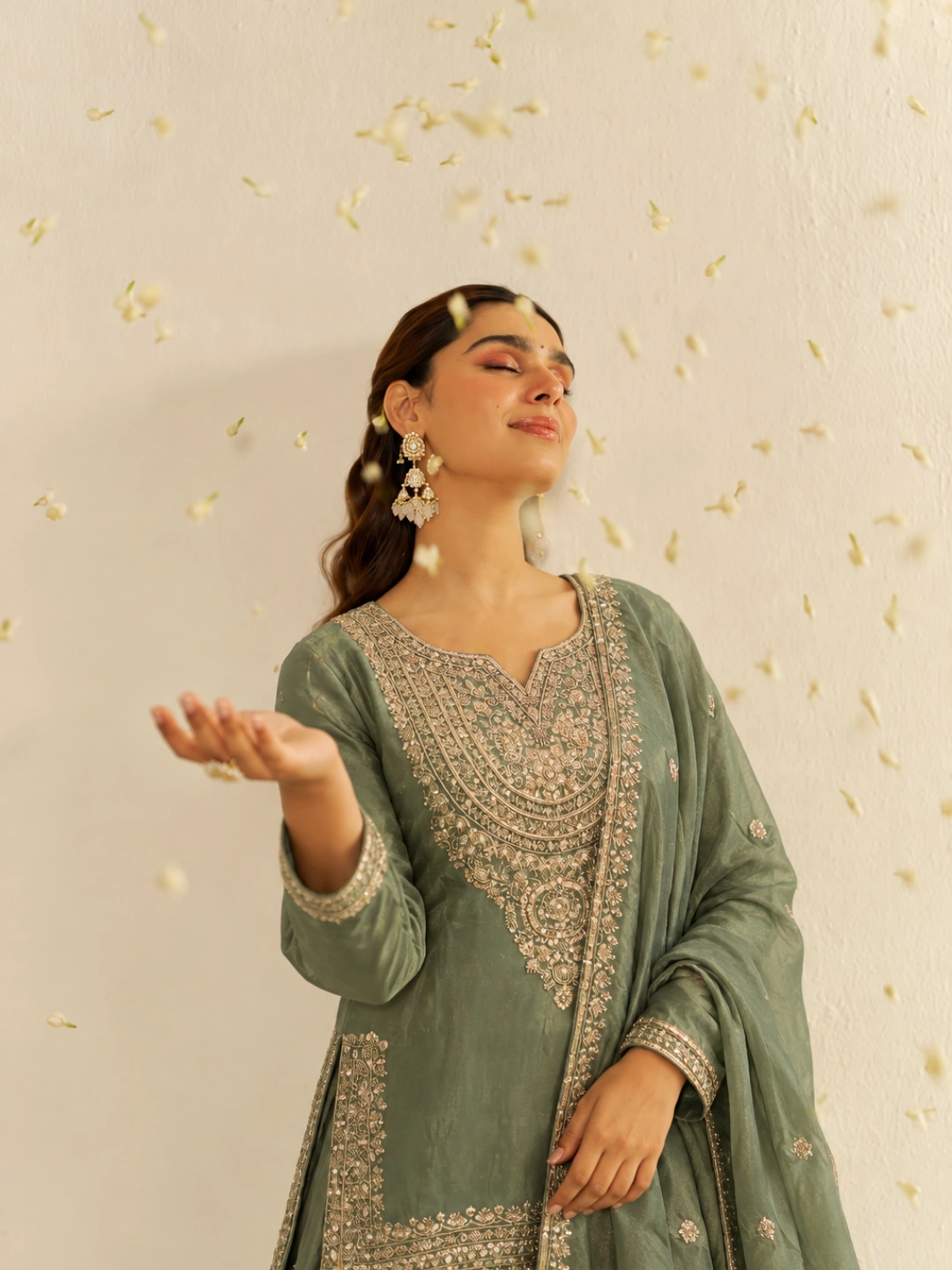
The Sage Green Festive Suit is the perfect example of how changing jewellery can change everything in your outfit. As sage colour has an earthy, calm shade, gold jewellery gives an oriental look to the outfit, pearl jewellery makes it soft and lightweight, while large earthen earrings will give the outfit an evening touch. Sage is also perfect for the daytime event, namely, Tulsi Vivah. Just choose one statement piece of jewellery and leave others plain.
4. Use Footwear to Control Formality
The kind of shoes you wear also defines the dressing-up factor of your outfit. Simple juttis and sandals make an ensemble casual and comfy, while fancy juttis and heels make it look dressier. This is exemplified in the Festive Fusion Teal Suit because the fusion suits complement themselves according to the change in footwear. Wearing simple flats for day-time puja and heels and fancy juttis for dinner is a great idea. Carry an extra pair along just in case.
5. Add More Embroidery for Night-time Events
Keep the best for last! In terms of this category, the Navy Blue Heavy Work Suit for Women is the most dressy. The very name gives away the fact that it will feature the heaviest embroidery and detailing. The suit is perfect for Diwali night, family dinner or wedding functions at the beginning of the season. Since there is a heavy load of embroidery on the suit, refrain from using too much makeup and jewellery.
6. Add a Layer for Cooler Evenings
The evenings in November get cooler in many parts of North India, thus making it appropriate and stylish to have a shawl or stole. The Mustard Yellow Festive Suit can be worn with a cream or maroon shawl, which provides contrast and makes sure you stay warm during the outdoor evening. Wear a light stole that does not obscure the entire outfit and wear it loosely. Keep it away from the lamps and diyas until you light them up.
7. Plan the Whole Month, Not Each Day
Plan for five suits per month, giving two or three occasions for each. A very basic plan could be made like this: the white suit for Dhanteras and Bhai Dooj, the mustard suit for day visits, the sage green suit for Tulsi Vivah, the teal fusion suit for a family dinner and a navy heavy work suit for Diwali night or a marriage ceremony. Just change your dupatta, jewellery, and shoes each time, and you will hardly ever repeat the same outfit. This also helps with easier shopping, as you are aware of what each suit should do.
What Mistakes Should You Avoid?
Do not club too many things together. Heavy suits with bold dupattas and big jewellery may appear cluttered. Never try to club gold and silver together in an outfit, and never wear shoes which are not match the colour. Always make sure to try on the outfit before the event so that you are aware of the movement of the clothes.
Conclusion
November requires more outfits than any other wardrobe can contain, but you need not buy a new suit for each event. Alter the dupatta, jewellery and shoes, select colours according to the time of the day and plan the whole month. Five suits with a few changes can make all occasions special.
Tags
Frequently Asked Questions
Which colours can be used for festivals in November?
Mustard, navy, teal, and sage green colours will be perfect to use, while white is the base colour.
Should I wear a heavy suit for Diwali?
A heavy suit will be suitable to wear at Diwali night, while a lighter suit will be better during daytime pujas and when visiting family members.
What should I wear with my festive suit on cold evenings?
Wearing a light shawl or stole in a contrasting colour will be practical as well as stylish.
.webp?v=1794222361951)